• Home
Showing posts with label Building. Show all posts

Sunday, November 23, 2008

A Green Building Report with some awesome statistics on LEED certified buildings

Joel Makower points us to a great report on the impact of LEED certified buildings. The Green Building Impact Report, written by Robert Watson, one of the brains behind the creation of the LEED certification program, is free to download or view online. The report, at only 24 pages long, is worth your time if you have an interest in green building, especially if you, like me, are trying to sell the idea of building LEED certified to stakeholders in your town or company.

Page 3 of the report summarizes the following statistics related to the environmental impacts of LEED certified non-residential buildings:

  • Nearly 400 million vehicle miles traveled have been avoided by the occupants of LEED buildings, thanks to efficient locations and the myriad of alternative transportation options supported by LEED. This will grow to more than 4 billion vehicle miles by 2020.
  • Expected water savings from LEED commercial buildings will grow to more than 7% of all non-residential water use by 2020. The equivalent of 2008 LEED water savings would fill enough 32-ounce bottles to circle the Earth 300 times.
  • LEED buildings consume approximately 25% less energy on average than comparable commercial buildings. By 2020, these energy savings will amount to more than 1.3 million tons of coal equivalent each year, representing approximately 78 million tons of avoided carbon dioxide emissions.
  • LEED has helped spur an entire industry in green building materials. Certified projects to date have specified a total of more than $10 billion of green materials, which could grow to a cumulative amount exceeding $100 billion by 2020.
  • Companies with employees working in LEED buildings realized annual productivity gains exceeding $170 million resulting from improved indoor environmental quality, a number that will grow to nearly $2 billion of annual productivity improvements by 2020.

Wednesday, December 19, 2007

PA State Rep. Matt Smith's Green Building Legislation passes unanimously


Great news for Pennsylvania! State Representative Matt Smith's green building legislation will provide tax incentives to both commercial and residential builders for energy efficiency and green design. The full text of the press release is below, here is a brief sound byte from Rep. Smith. I will follow this up with more details as they become available.


HARRISBURG, Dec. 12 – State Rep. Matt Smith, D-Allegheny, said legislation he authored to promote environmentally friendly construction and renovation in Pennsylvania unanimously passed the House of Representatives today during the special session on energy independence.

“This legislation will not only pay off environmentally, but economically as well,” Smith said. “By encouraging the use of environmentally smart materials and building design, we will generate new economic growth and development in an industry that has nowhere to go but up.”

The legislation, Special Session H.B. 5, would provide tax credits to commercial or residential owners or tenants for the construction of “green” buildings, or the renovation of non-green buildings into green buildings. These buildings, known as high-performance buildings, must meet specific size standards in order to qualify, and must also meet specific environmental standards in several areas, including sustainable site development, water savings, energy efficiency, materials selection and indoor environmental quality.

“Green buildings are more comfortable to live and work in, and that increases quality of life at home and productivity on the job,” Smith said. “Green buildings also save on the cost of energy in operating the building over the life of the structure.”

The special session on energy independence was called by the governor over the summer. During the special session, only legislation affecting energy policy can be introduced, debated and passed

Thursday, December 6, 2007

Make it Right - please donate to help rebuild NOLA's lower 9th ward with Green homes


Brad Pitt has been on the news recently getting publicity for his Make it Right project in the devastated lower 9th ward in New Orlean. Pitt has assembled an all star team of green designers, architects, and builders for this project. The website, www.makeitrightnola.org, contains plenty of video and flash animation and a method for you to donate cash to "adopt" a house. A cool feature is that it even allows you to designate that you want your donation to go towards the purchase of green items such as rooftop solar panels, solar thermal, CFLs, and environmentally safe paint.

As of this post, 9 of 150 homes have been adopted ($150,000 per home). This is a great initiative so please, check out the site and donate today!

Monday, November 19, 2007

Green Day in Pittsburgh

Today we learned of more good green news for Pittsburgh. Earlier today Councilman Bill Peduto's green building incentive proposal passed with unanimous support from city council. This is a great start for Pittsburgh to regain it's status as the #1 city for Green Building. In addition to the passing of the city's first green building legislation, Peduto proposed new legislation that would require all new or newly renovated city facilities, and all development that uses tax-incremental-financing to achieve LEED Sliver certification, at a minimum.

This is huge news. Over the last two to three years a number of cities have leapfrogged Pittsburgh in the green building rankings because they have implemented the incentives and mandates that our local government has, until now, failed to provide. We have always had the leadership in the form of the councilman and the Green Building Alliance, and now with this new legislation, Pittsburgh will level the playing field. From the councilman's blog:

Green Day

Today is a historic day in the City of Pittsburgh. At 10:00 AM, I introduced legislation in City Council that requires all new construction and renovations of City owned property to receive at least LEED Silver certification. The legislation also requires any new construction or renovation project that receives Tax Increment Financing (TIF) to receive LEED Silver certification. At the same meeting, City Council took a final vote on legislation I sponsored that provides a 20% density and/or height bonus for developments in non-residential areas that receive LEED certification. Due to the fact that the City Planning Commission had given the legislation a negative recommendation, a supermajority was required, and it passed with all eight Council Members voting in favor.

Pittsburgh has been a historic leader in the environmental movement, and especially in the development of green buildings. Pittsburgh currently has the third most LEED certified buildings of any city in the United States. However, until today, local government has never taken action to support the growth of green building development. Today, City Council is putting itself at the forefront of this critical issue. Pittsburgh will be joining over a hundred other federal, state, and local governments in providing similar types of incentives.


Below is the full text of Councilman Peduto's proposal:


915.06 Sustainable Development for Publicly Financed Buildings

915.06.A Purpose
The City of Pittsburgh is committed to building and supporting sustainable developments, to yield cost savings to the city taxpayers through reduced operating costs, to provide healthy and productive work environments for all residents and employees, and to contribute to the city's goals of protecting, conserving, and enhancing the region's environmental resources. Additionally, the city shall help to set a community standard of sustainable building.

915.06.B Applicability
  1. The following development requirements apply to all new construction and renovations of City owned property in which the total project square footage includes 5,000 gross square feet of occupied space or the total project cost exceeds two million dollars.
  2. Any new construction or renovation project that receives Tax Increment Financing (TIF)

915.06.C Definitions
  • LEED Certified Building: shall mean a building certified, under the Leadership in Energy and Environmental Design (LEED) program of the United States Green Building Council, that meets LEED standards for either New Construction and Major Renovation Projects or Core and Shell Projects.
  • LEED Silver: shall mean a building certified, under the Leadership in Energy and Environmental Design (LEED) program of the United States Green Building Council, that meets LEED standards for either New Construction and Major Renovation Projects or Core and Shell Projects that receives a total of 33-38 points in the certification process.
915.06.D Sustainable Development Requirements
Prior to issuance of an occupancy permit, all projects receiving Tax Increment Financing and all new construction and renovations of City owned property in which the total project square footage includes 5,000 gross square feet of occupied space or the total project cost exceeds two million dollars, must receive a LEED Silver rating level.

Wednesday, November 14, 2007

Good green legislation in Pittsburgh

Pittsburgh city council unanimously approved councilman Bill Peduto's proposal for loosening building code restrictions for green certified buildings. Council Peduto has long been the green champion of the city of Pittsburgh government. The approval his green building proposal has been long over due, as Peduto proposed this legislation back in June of 2006.

From the post-gazette's June 26th 2006 article on Peduto's proposal:

Still, Pittsburgh isn't among the scores of cities with legislated incentives for environmentally friendly construction.

"It's almost embarrassing that we haven't had more leadership from local government," said Ms. Flora. Instead foundations, especially the Heinz Endowments, have led the charge.


Yes, it is about time. Just a few years back the city of Pittsburgh was ranked #1 for the number of LEED certified buildings. A number of cities have leapfrogged Pittsburgh as they have provided more incentives for green builders. I believe we are now 4th or 5th and wouldn't be surprised if we slipped even further in the ranks due to the lack of support from city government. I like this proposal because it uses a carrot besides tax abatements to spur development in the city.

From Peduto's Reform Pittsburgh Now website:

Green Building Incentive

An Ordinance sponsored by Peduto that will provide height and/or density incentives to promote green building in Pittsburgh. Although Pittsburgh is presently third in the nation in the number of green buildings, other cities, states and countries have begun to incentivize this policy. By providing over the counter variances of up to 20% for building height and/or density (the number of units), Pittsburgh could help to spur green development without using tax dollars. This Ordinance would not be permitted in residential or local neighborhood commercial districts where height is a great concern. It has been endorsed by the Green Building Alliance of Pittsburgh that was instrumental in the drafting of the legislation.


Note to Bill Peduto - I am available to work on drafting additional green legislation.

Sunday, November 11, 2007

Green Building Tour this Saturday November 17th

Join me and other green activists on a tour of several green buildings here in Pittsburgh. The event is sponsored by the Sierra Club and will be followed by a reception at 4:30pm at the CCI Center (pictured) on the South Side. You must RSVP to attend the tour, the details are below.


Green Building Tour
Saturday, November 17

Learn about green building design at an area high school and convent, a residential development, and a non-profit center. Find out how you can use these principles in your own home, and how you can help stop global warming. Then, join us for a reception featuring speakers, refreshments, and an opportunity to take action!

Tour:
12:00-4:00pm
Meet at the CCI Center, 64 S. 14th St., South Side

Tour the Felician Sisters Convent and High School, the Riverside Mews housing development, and the CCI Center.

This event is free, but space is limited. Please RSVP by November 12.

Reception:
4:30-6:30
CCI Center, 64 S. 14th St., South Side

Speakers, music, and refreshments
Note: You may attend the reception and not the tour.

For more information or to RSVP, contact Randy at 412-802-6161 or randy.francisco@sierraclub.org

Friday, October 19, 2007

Carnegie Mellon team stands out at the Solar Decathlon

The CMU team built it's solar powered modular house nicknamed TriPOD down at the Solar Decathlon in Washington DC. According to several web sites, the CMU team has been a standout in its design and also utilization of technology, such a system that runs student written software that will display energy usage information and allow automation of the house's lighting and cooling. Pretty neat. I'll post more when we find out the results but in the meantime check out CNet which has a slideshow and some video coverage of the event.

Tuesday, August 28, 2007

Cleveland - Green City Blue Lake


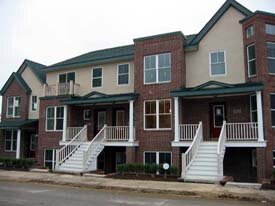
I came across this website on the city of Cleveland's green residential development known as the Cleveland EcoVillage. The EcoVillage is a mix of energy efficient single family homes and townhouses built on a redeveloped section of the city's west end. The village was built within walking distance of a transit station on a rail line that was supposed to be closed down.

This urban revitalization has been a success so far and is a huge win for the city of Cleveland as it makes its way back to prosperity after losing roughly half a million residents over the last 50 something years. The city, like Pittsburgh, has a green building coalition and is increasing its efforts towards becoming a sustainable city. Unlike Pittsburgh, however, Cleveland already has a pretty decent mass transit system in place, which helped rank Cleveland 28th on Sustain Lane's Green cities rankings.

This project gives hope for some of the blighted areas of Pittsburgh. There are already plans for two green housing developments in the Pittsburgh, although I don't see the transit system improving anytime soon, especially when we are spending half a billion on a tunnel to nowhere. Despite not having the transit in place, I think Pittsburgh's green movement could start to build some serious momentum if the city can work with the non-profits and transit authority to put some muscle behind an initiative like the EcoVillage.

From the EcoCity Cleveland website:

The first major development of the Cleveland EcoVillage project consists of 20 town homes on W. 58th Street just north of Lorain Avenue. The developer is the Detroit Shoreway Community Development Organization. EcoCity Cleveland is providing design assistance with the support of grants from the Cleveland Foundation and the George Gund Foundation.

As of June 2004, construction of all 20 units was complete and all had been sold. The town homes average 1,600 square feet and feature the latest green building features, including energy efficiency, controlled ventilation, non-toxic building materials, and proximity to transit. The architect is Betsy Pettit of Building Science Corporation, a national leader in the design of high-performance buildings.

Monday, August 20, 2007

It is time for Pittsburgh's "Green Triangle"

It is time for the city of Pittsburgh to be a leader and innovator among green cities. The city was actually ranked #1 for total LEED certified buildings back in 2005, however, other cities with more aggressive green goals have either caught up or surpassed Pittsburgh in the green building rankings. So what can we do now to stand out? How about putting green roofs on every possible building in downtown Pittsburgh? How about we transform downtown's Golden Triangle into the Green Triangle?

Imagine seeing this view as a visitor flying into town for the first time:


Personally, I find the green rooftops much more visually appealing than the typical black and gray tar and concrete rooftops. But this is not about making Pittsburgh "pretty." This initiative is about making Pittsburgh the leader in green roofs and setting an example of how going green can save businesses and government buildings in downtown districts millions of dollars in heating and cooling costs and, in addition, providing the following benefits to the general public:

  • Reduction of surrounding air temperatures
  • Improved air quality/reduced C02 emissions
  • Storm water retention/reduction of pollution in runoff water
  • A greener and more productive work environment
These are just a few examples of some of the beneifts that are listed out on greenroofs.org and greenroofs.com.

Pittsburgh currently has a number of green buildings, several of which have been around for a while including two at Carnegie Mellon University. It is too bad that this Trib Review article from two years ago mentioned the cost savings potential of green roofs yet here we are today without much progress in this green area. Since our political leaders are reluctant to take (most, with the exception of BP) a chance on something this big, it is up to us green bloggers and green advocates here in the burgh to organize and take action. Please email me if you are willing to create a task force or if you are already part of a green group that would like to round up volunteers and obtain funding to take on the work of this massive and ground breaking green project.


Pittsburgh buildings with green roofs (from greenroofs.com)

Project Year Location Roof Size

Alcoa HeadquartersCurrentPittsburgh, PA, USA13920 ft²1293 m²
Carnegie Mellon University, Hamerschlag Hall2005Pittsburgh, PA, USA4200 ft²390 m²
Children's Museum Pittsburgh2005Pittsburgh, PA, USA64 ft²6 m²
Carnegie Mellon University, Mellon Institute2005Pittsburgh, PA, USA1300 ft²121 m²
Heinz 57 Center/Gimbels Building Restoration2001Pittsburgh, PA, USA12000 ft²1115 m²
Total Queried Roof Size: 31,484 ft² (2,925 m²)


Monday, August 6, 2007

Data Centers - the return of the giant sucking sound

Computers have always been known to be one of the biggest energy hogs. Due to the increasing number of web servers required to continue our expansion into the digital age, new data centers filled to capacity with computer server racks are popping up all over the United States. This expansion should be a good thing for our economy, but until recently, energy efficiency was not high on the list of priorities for data center operators. Their chief concern was location location location as they looked to expand near place that had access to cheap electricity, which is why Microsoft, Yahoo, and Google have all invested in data centers close to cheap hydro electric producers in the Northwestern US. This lack of planning and foresight could really come back to bite us.

According to a report the EPA just released, power consumption by these data centers is growing out of control. At 1.5% of total electricity consumption, computer data centers are fast becoming the biggest consumers of electricity in the United States. Data center power consumption is on a tear, having doubled since the year 2000 and scheduled to double again by 2011. With Google's digitization of just about everything, and with everyone signing up for blogs, myspace accounts, and online photo sharing, data center operators such as Equinix cannot open enough data centers to keep up with the demand.

From one of my new favorite green blogs, Green Wombat:

"Left unchecked, data centers could double their energy consumption over the next five years at a cost of $7.4 billion annually, according to a report [to the US Congress] issued today by the U.S. Environmental Protection Agency. By 2011, the equivalent of 10 new power plants would be needed to supply 12 gigawatts of electricity unless the energy efficiency of data centers can be improved. That's bad news for the corporate bottom line and the environment. It's also a hit on taxpayers' wallets: federal government data centers alone consume about 10 percent of that electricity.
With the concern for global warming and increasing number of studies related to data center inefficiencies, the free market has the opportunity to once again save the day as a number of established and new companies bring products and technologies to meet the demands of the marketplace. Mature tech firms like AMD, Sun Microsystems, and even Dell, who I picked on for their plant a tree program, have taken the lead among tech companies in promoting energy efficient products and practices. This segment of the tech market has even spawned significant M&A activity as of late, with the recent acquisitions of virtualzation software firms VMWare and OpsWare by EMC and HP, respectively.

The opportunity for startups in this field is wide open. Besides microchips, which has been the focus of AMD and Sun, data center server software and hardware companies have a chance to make a huge splash in solving this growing problem. Even with the industry giants such as IBM and Cisco investing hundreds of millions into solving the energy consumption issue - small startups like Quellan and Net Effect are finding that they can capture a slice of the $4 to $5 billion dollar market with niche products such as more energy efficient cables and adapters. Like the fervor of investing in everything related to green power generation, I expect startup activity in the energy efficiency segment to start making some noise, with the data center segment being the most obvious opportunity for success.

Wednesday, July 18, 2007

Mark DeSantis: "The city needs to 'LEED' by example"

I sat down with Pittsburgh Republican mayoral candidate Mark DeSantis earlier today to further discuss his candidacy and some of his ideas for improving Pittsburgh. First and foremost, my agenda was to talk about Mark's ideas for making Pittsburgh a leading center and magnet for clean tech and renewable economic activity.

Mark has plenty of ideas, and also has some experience in this field as an advisory board member to Sustainable Pittsburgh, a non profit whose mission is to "affect decision-making in the Pittsburgh Region to integrate economic prosperity, social equity, and environmental quality bringing sustainable solutions to communities and businesses."

The first thing Mark said is that the city government must lead by example. What does that mean, I ask? "The city owns roughly 300 buildings around town. We must start to make those energy efficient. While our financial situation will limited our ability to make all of those green (LEED) certified, we need to start taking steps in that direction."

Great start, as the government leading the way would help increase awareness of climate change and energy efficiency among Pittsburghers.

We then started to discuss Austin Texas and the partnership there between Austin Energy, the city run utility, and the Clean Energy Incubator out of the University of Texas. Mark agreed that we must be creative in our attempt to lure clean tech businesses and startups to Pittsburgh as our financial constraint limit the cities ability to keep handing out tax subsidies. This includes forming partnerships with suppliers, universities, non profits, and councils and incubators like Pittsburgh Tech Council and Innovation Works. What we have here is "a lot of separate individuals and groups out there trying to do different things in this sector, and what we need is an overarching group that pulls together the entire vision for clean tech here in Pittsburgh.

Mark suggested a Clean Tech Advisory Council to oversee all of the individuals groups and consortiums such as the Green Building Alliance, companies looking to develop clean technologies in Renewable fuels and Solar, and the early stage start up companies that are already here in Pittsburgh, like a Plextronics.

One of the most important things he mentioned in regards to the cleantech sector here in Pittsburgh is the lack of collaboration between the city and our universities. Carnegie Mellon has the Green Design Institute, but why hasn't there been any major projects undertaken by the city with the guidance of CMU's GDI?

As you could probably guess, being a technology guy and green advocate Mark has a lot to say on this particular issue. I hope to work with Mark when it comes time to develop more concrete plans, but I like the direction he is going on this issue. See my Democrats for DeSantis blog for more on my talk with Mark.

Monday, March 5, 2007

How you and I can make a difference at work

I couldn't sleep last night because my brain was busy trying to think of ways I can have an impact on my company's energy usage. We recycle paper, as does most large corporations nowadays, and we also encourage carpooling. I wanted to propose an energy initiatives that would have the biggest impact while being somewhat easy to implement, and most important, have measurable benefits. From these criteria I believe that a solar power installation would be the way to go. We have a large distribution center that runs 24/7, ditto for our data center. Both are energy hogs and while I haven't done any investigation in our annual electricity costs an increase is almost certain due to both our growth as well as an increase in electricity prices. Okay, great, now how do I sell this to VITO (Very Important Top Officer) ?

1. First things first, figure out the financial ramifications, especially if yours is a public corporation. The goal should be to figure out the Net Present Value (NPV) of the purchase of a commercial photo voltaic (PV) installation. The keys here are to figure out the total system cost after any state and/or federal tax credits or rebates, followed by the total cost savings due to the difference in energy used and the electricity you were able to sell back to the utility company.

There is a Federal Business Energy tax credit that covers up to 30% of solar installation. The Energy Policy Act of 2005 anncounced that businesses may be eligible for credits such as:

  • 30 percent tax credit for the installation of qualifying solar equipment on buildings;
  • Business tax credits for companies that build highly energy efficient homes;
  • Credits for companies that manufacture energy-efficient appliances such as dishwashers, clothes washers and refrigerators.
So, there is a tax credit of 30% for a commercial solar installation. Sweet. The next step would be figuring out how big of a system you will need. You'll have to do some digging for electricity bills in order to get an idea of the monthly kilowatt hour usage. After you figure how much power your system would need to produce you can then get an idea of the total cost.

Using some excel skills you can do some modeling to figure out the optimal number of solar panels to maximize the NPV. There are several other inputs you need to consider, such as the average number of hours of daily sunlight in your area and also the rate at which you can sell power back to your utility company. All of this information is out on the www.

2. The second component of your pitch is to make sure to trumpet the marketability and goodwill associated with this initiative. "Going Green" could really change how your company is perceived in the marketplace. Entire marketing campaigns revolving around your green campaign can drive incremental sales through increased customer and brand loyalty.

There is much more to this but as I learn more about the benefits and incentives around solar power its hard for me to understand why more companies have not looked into implemented a renewable energy strategy. Part of it comes down to a lack of knowledge regarding renewable energies, while another component is the lack of understanding that investing some of that spare cash into solar or wind power can both help the environment while increasing shareholder value over the long run.

Traditionally, companies with strong positive free cash flow do one of the following:

Let the cash accumulate in the bank or in short term investments sit in the bank or in short term investments, use the cash to make a diversifying acquisition, which usually turns out bad, or they pay out some of the cash in dividends or return some of the cash back to the shareholders through stock repurchases.

I propose that more companies start to look into using some of that cash to improve their sustainability through investments in renewable energies, which, unlike most of the acquisitions we have seen over the past two decades, do not destroy shareholder value. I'll post my cash flow analysis as soon as I do some more research on implementing a commercial solar installation at my company. Anyone else have any ideas for green energy initiatives at work?

Tuesday, February 20, 2007

Boston Decrees Green Building a Must

All new construction projects over 50,000 square feet have to qualify for LEED status. The LEED Green Building Rating System is a voluntary standards and certification program created by the U.S. Green Building Council that recognizes environmentally friendly construction projects. Will this mandate allow Boston to overtake Pittsburgh as the city with the most "green" certified building projects?


read more at Business Week | digg story

Saturday, February 10, 2007

Phipps Conservatory - The Green Heart of Pittsburgh


So after all these years living in Pittsburgh (9 out of the past 10 yrs), and after several attempts by my wife to get me to go, today I finally went to Phipps Conservatory and Botanical Gardens. The place was amazing. Not only did it have trees and plant species from all over the world, but it was a conservationists dream.

The welcome center (pictured above) and greenhouses had several green design features that make it one of the most, if not the most, self sustainable greenhouses. One of the highlights of the center's green design - energy efficient cooling and heating with underground "earth tubes" which are used to create a natural air conditioning.


Another cool thing was the presence of a Fuel Cell (pictured)which was used to power the conservatory's Thailand rain forest exhibit. Although Fuel Cells do emit some emissions, they are much better than any power coming from a coal or gas fired electric plant.

So, not only did I get to witness some awesome green technology in action, but I got to breath in some nice fresh air free of pariculate matter, and I gained some hope that Pittsburgh can become a leading "Green" city, at least when it comes to green building initiatives like the conservatory and convention center.

Oh, and one last thing - a plug for the conservatory's cafe. I had no idea they had a cafe that sold several varieties of micro brews. I went to school just up the street at CMU for two years, had I known there were micro brews at Phipps that would have been one of our favorite lunch spots.

Sunday, January 21, 2007

Homeowners Cash In On Sun's Energy

The joy of watching your electric meter run in reverse...

I've always thought it would be great if I could sell my unused electricity back to the utility companies. Unfortunately, my salary does not afford me the luxury of spending thousands of dollars on an installation. It would be great if your average citizen could afford these systems but right now solar power systems are affordable to a small percentage of Americans (those that do not need to shave $'s off their monthly electric bills!) . Without getting into the ROI calculations of a solar installation I want to list a few things that have to happen before we see these in the homes of more Americans.

1. More tax incentives - take away tax breaks from Peter (energy companies) to pay Paul (we, the consumer). This site lists a database of incentives by state.

2. Better marketing of installation services. Currently, Home Depot is the only large company that offers to install these things. Although I shop at Lowes I have been in Home Depot stores and had no idea they were offering home solar installations.

3. Continued VC support of solar tech. Several early stage solar companies, Nanosolar and Heliovolt come to mind, are developing alternatives to the expensive photovoltaic (PV) cells. The increase in the number of competing technologies and the number of competing firms will eventually lower the total cost to consumer. Since the traditional PV cell relies on expensive Silicon, its high installation cost makes it less competitive with traditional electricity power.

Google