• Home

Wednesday, September 26, 2007

The need for a Clean and Green Pittsburgh - and the need to remove the blight!


Welcome to Blightsburgh. Last week I read this story about a Northside woman's struggle to deal with the mess and nuisance of the house next door. This woman's struggle has validated my feeling that the Redd Up program under Mayor Ravenstahl has been a huge disappointment. Don't get me wrong. The public works folks and the volunteers have been working really hard, as evident by the hundreds of photos on the city of Ravenstahl-burgh's website, but I've never been in a city with more abandoned houses, more overgrown lawns, and more eyes sores than the city of Pittsburgh.

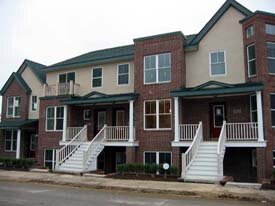
This city does not have any standards. At our house in Beechview(which we still own ), we worked hard to keep our yard looking decent, but what about the house across the street(pictured above and below)? A complete disaster. On top of the house across looking street looking like a landfill, the people living there were even worse. They sell drugs, do drugs, curse all day and night at each other, and have their friends over honking the horns and playing loud music at all hours of the day and night.


This was unacceptable, and it eventually forced us to move out. We won't start a family in that environment. Hundreds of calls to the police by us and our neighbors did nothing to fix the situation. In fact, one officer, after responding to my wife's call to the police, told her that they couldn't do anything and that we were "SOL." So, the city and its police force let a house of unemployed drug users stay and in the process lost a dual income earning and taxpaying married couple. Its a shame too, because we lived on a great street with great neighbors.


But its not just Beechview. In just about every neighborhood here in the city of Pittsburgh you will see abandoned houses that have boarded up and have not had their lawn's cut in years. You will hear from friends who are living next door to someone who does not cut their lawns, who leaves garbage on their front porch and lawn, and who has zero regard for their neighbors across the street or next door to them. I know this because I lived through this the last 6 years I lived in Greenfield and Beechview. I see more and more of it every day while I've been campaigning for Mark DeSantis throughout the city. Last weekend, while we were in Point Breeze, I almost tripped and fell down a flight of stairs at a house with garbage and debris covering its front porch. This past weekend I saw more of the blight in Oakland, Squirrel Hill, East Liberty, and Highland Park. Each day I see it in other neighborhoods as I take the T into work.

So how bad are we compared to other cities? We're not the worst, but Pittsburgh does have the 5th highest rate of vacant properties per 100 residents. Additionally, the City has 200 more vacated properties than it did under Mayor O'Connor, further proof that Redd Up under Luke has a long way to go. So what is the mayor's plan? Up in Buffalo, Mayor Byron Brown has proposed an ambitious plan to spend $100 million razing 5,000 vacated homes over the next 5 years.


The city has a nice showcase of some of these properties on the website where they are trying to sell the dilapidated houses. Here are a few of houses around the city that are for sale:


Thursday, September 20, 2007

Car Sharing with Flexcar taking off in Pittsburgh

So far so good for Flexcar here in Pittsburgh, as the service announces an expansion into Shadyside and growth to 55 cars in parts of downtown, Oakland, and now Shadyside. Click here for a map of Flexcar vehicle locations around town.


Tuesday, September 18, 2007

CMU Professor Jay Apt to speak in Pittsburgh on Global Climate Change

You are invited to join us on Thursday, September 27, 2007 from 7:30-9:00 a.m. at The Rivers Club in Pittsburgh for a special alumni breakfast presentation by Tepper professor, Dr. Jay Apt on Global Climate Change.

Jay Apt holds an undergraduate degree from Harvard and a doctorate from MIT in experimental physics. He was selected as a NASA Astronaut in 1985, and has spent more than 35 days in space on four Space Shuttle missions, and performed two space walks (one an emergency rescue of a satellite). He has been to the Russian space station Mir, and is the recipient of NASA’s highest medal. He received the Metcalf Lifetime Achievement Award for significant contributions to engineering in 2002. Dr. Apt is Executive Director of the Carnegie Mellon Electricity Industry Center at Carnegie Mellon University’s Tepper School of Business and the CMU Department of Engineering and Public Policy, where he is a Distinguished Service Professor. He received an A.B. from Harvard College in 1971 and a Ph.D. in experimental atomic physics from the Massachusetts Institute of Technology in 1976. His research, teaching and consulting interests are in economics, engineering, and public policy aspects of the electricity industry, economics of technical innovation, management of technical enterprises, risk management in policy and technical decision framing, and engineering systems design.

The event is being sponsored by the Tepper Pittsburgh Alumni Chapter and is open to all Carnegie Mellon alumni, students and guests. Attire is business casual and alumni are encouraged to bring business cards for networking.

The cost of the seminar is $20.00 which covers the cost of the hot buffet breakfast. You may register in advance online at www.tepper.cmu.edu/alumni/pit using your VISA, MasterCard or American Express Card. The cost for on-site registration is $25.00 by cash or check at the door.

Tuesday, September 4, 2007

Bring Streetcars back to Pittsburgh

NYU Law Student and former Southsider Michael Byrne wrote a compelling opinion piece in Sunday's Pittsburgh Post-Gazette on bringing streetcars back to Pittsburgh. The late Mayor Bob O'Connor had a vision for bringing back streetcars as a way to spur development and provide an affordable connection of downtown to the universities and hospitals. O'Connor was ridiculed by some of his opponents in the 2005 Democratic primary, but I'm not so sure those same people who argue against the streetcar idea after having read Mr. Byrne's piece.

I've been a proponent of extending the light rail from downtown to Oakland, but with the cost of that extension probably running in the hundreds of millions, coupled with the current North Shore Connector project that will cost at least half a billion, additional light rail extensions at this time or in the near future are not likely. Streetcars, as Mr. Byrne points out, are a very cost effective way to extend mass transit while at the same time encouraging economic development along the streetcar lines. Look at the table below of the costs of implementing streetcars in a number of cities that are already reaping the benefits of the economic development . In Portland alone there was over $2.28 billion in transit oriented development within two blocks of the street car lines. It looks and sounds like a no brainer to me too.


So what is keeping Pittsburgh from doing something like this? Right now Pittsburghers are currently suffering from a lack of forward thinking from our political leaders. Instead of expanding light rail to the masses, we're stuck digging a tunnel under the river that will connect virtually zero neighborhoods to the two stadiums and the casino. The tunnel and connector were not a prerequisite to new development - that was already happening on the North Shore, but we're stuck with it since the federal government was providing matching funds.

How would we fund new streetcar lines here in Pittsburgh? As Mr. Byrne points out, the Federal Transit Authority offers grants for smaller scale transportation projects. Known as "Small Starts", the FTA provides grants for the "capital costs associated with new fixed guide way systems, extensions, and bus corridor improvements. " This is one source of funding our congressmen should be fighting for.

Additionally, as they did in Portland, private corporations could be enticed to join in the funding effort through sponsorships. This is particular interesting here in the city of Pittsburgh, where non-profit entities make up a large chunk of our employers and take up a lot of land that could be used for tax revenue generating businesses. Today, the non-profits are contributing voluntarily to a fund that is supposed to assist in the city with its financial woes. That fund is set to expire, and if some political leaders had their way they would overturn Act 55 and force non-Profits like UPMC to pay taxes on their excess income.

Taxing non-profits is not the way to go. It only creates an us-against-them mentality while the city, UPMC, and other non-profits should be looking to form a partnership. The city should work with the non-profits in forming an annual fund where the non-profits would make investments in the city for specific infrastructure improvement or enhancement projects. A tax that goes into the city's general fund is not fair - especially when the city can use that money at its discretion. Having the non-profit contributions go towards a dedicated project that also provides some benefits to them, like steercar lines, makes the most sense to me.

Wednesday, August 29, 2007

Introducing EcoPulse - Pittsburgh's connection to energy and environmental resources


Last month I started receiving the Pittsburgh Technology Council's new environmental newsletter, EcoPulse. The fact that our tech council has started this initiative is signs that the intersection of business, technology, and the environment is becoming a reality here in Pittsburgh. The monthly newsletter includes a number of topics including green news, events, local company profiles, and also profiles of individuals who are making a difference here in the burgh. Please take a minute to subscribe to this monthly newsletter, hopefully you will see my mug on there in a future issue.

Tuesday, August 28, 2007

Cleveland - Green City Blue Lake


I came across this website on the city of Cleveland's green residential development known as the Cleveland EcoVillage. The EcoVillage is a mix of energy efficient single family homes and townhouses built on a redeveloped section of the city's west end. The village was built within walking distance of a transit station on a rail line that was supposed to be closed down.

This urban revitalization has been a success so far and is a huge win for the city of Cleveland as it makes its way back to prosperity after losing roughly half a million residents over the last 50 something years. The city, like Pittsburgh, has a green building coalition and is increasing its efforts towards becoming a sustainable city. Unlike Pittsburgh, however, Cleveland already has a pretty decent mass transit system in place, which helped rank Cleveland 28th on Sustain Lane's Green cities rankings.

This project gives hope for some of the blighted areas of Pittsburgh. There are already plans for two green housing developments in the Pittsburgh, although I don't see the transit system improving anytime soon, especially when we are spending half a billion on a tunnel to nowhere. Despite not having the transit in place, I think Pittsburgh's green movement could start to build some serious momentum if the city can work with the non-profits and transit authority to put some muscle behind an initiative like the EcoVillage.

From the EcoCity Cleveland website:

The first major development of the Cleveland EcoVillage project consists of 20 town homes on W. 58th Street just north of Lorain Avenue. The developer is the Detroit Shoreway Community Development Organization. EcoCity Cleveland is providing design assistance with the support of grants from the Cleveland Foundation and the George Gund Foundation.

As of June 2004, construction of all 20 units was complete and all had been sold. The town homes average 1,600 square feet and feature the latest green building features, including energy efficiency, controlled ventilation, non-toxic building materials, and proximity to transit. The architect is Betsy Pettit of Building Science Corporation, a national leader in the design of high-performance buildings.

Monday, August 27, 2007

Beaver County Coal Plant fined $25,000 for latest Soot Incident - WHERE IS THE JUSTICE??

FirstEnergy Corporation's Bruce Mansfield plant in Shippingport, Beaver County was fined $25,000 for releasing soot that ended up covering more than two dozen properties this past June. The June incident is the second time within twelve months that FirstEnergy's plant has fined by the state's Department of Environmental Protection. The fine is the maximum allowed by our state's Air Pollution Control Act.

There are two major things wrong here. First, this plant was ranked as the 17th worst polluting plant in the United States, and it is one of the major reasons we here in Southwestern PA rank as one of worst MSAs for air particulate pollution. So why is this plant allowed to stay operational? People who work at the plant and the local small businesses who support their families obviously want the plant to stay open - even though they may not realize the detrimental effects their employer has on the health of their families. But why can't we start shutting down this dirty plants and begin putting those displaced employees to work for companies producing green energy?

The second major thing I find wrong with this incident is the lame penalty. The maximum penalty for this soot pollution offense is only $25,000 - this is not enough! The cost of reducing or eliminating this soot pollution for First Energy is probably in the millions of dollars. Since they do not fear getting shut down and they are fined a tiny amount - there is no incentive to clean up their act. We need to start replacing the dirty power and dirty jobs with green power and green jobs!

According to the Air Pollution Control Act website, the Act is in place in order to:


To provide for the better protection of the health, general welfare and property of the people of the Commonwealth by the control, abatement, reduction and prevention of the pollution of the air by smokes, dusts, fumes, gases, odors, mists, vapors, pollens and similar matter, or any combination thereof; imposing certain powers and duties on the Department of Environmental Resources, the Environmental Quality Board and the Environmental Hearing Board; establishing procedures for the protection of health and public safety during emergency conditions; creating a stationary air contamination source permit system; providing additional remedies for abating air pollution; reserving powers to local political subdivisions, and defining the relationship between this act and the ordinances, resolutions and regulations of counties, cities, boroughs, towns and townships; imposing penalties for violation of this act; and providing for the power to enjoin violations of this act; and conferring upon persons aggrieved certain rights and remedies. (Title amended Oct. 26, 1972, P.L.989, No.245)
Is it possible that this Act needs to be revamped in order to levy heavier fines on polluters such as FirstEnergy? It is time for our state congressman to step up and do something about these irresponsibile actions. It's time to shut down these dirty plants - or at least give them a deadline to get their acts together. I saw set a hard deadline and shut down the polluters who do not meet the minimum pollution control requirements. The state could create a green jobs training and placement program for the displaced workers.

To be fair to FirstEnergy, they reported that the plant's emissions scrubbing equipment had a malfunction, which caused the soot to be released into the air and onto the houses. If this is the case and they truly are trying to clean up their act - we'll see where the Shippingport plant stands when next year's dirty plants rankings are released.

(Note - as I sit here typing this post a commercial just aired claiming that coal is "securing our future" and that we have over two Saudi Arabia's of coal here in the US)

Wednesday, August 22, 2007

Coal-to-liquids - a dangerous substitute for foreign oil

The coal industry has been touting coal liquification as a viable gasoline replacement for years. The industry wants us to believe that since the US already has an abundance of cheap coal, coal liquification is the fastest and most cost effective way for us to achieve energy independence. This doesn't appear to be the case when you consider the cleaner alternatives and the true costs of liquid coal - the environmental costs. Carnegie Mellon's Electricity Industry Center recently came out with a report that concluded that passenger vehicles using coal to liquids gasoline had the worst greenhouse gas emissions, and that plug-in hybrid electric vehicles had the lowest GHG emissions.

As the chart below shows, the difference in the emissions isn't even close - plug-in hybrids, when charged by coal plans using carbon capture sequestering technology, had about 1/3 the the GHG emissions as a conventional gasoline vehicle, and roughly 20% of the emissions from a vehicle fueled by liquid coal gasoline.

So why do we continue to see more subsidies targeted to liquid coal companies and alternatives such as corn based E85 when there is so much evidence out there that these solutions are not safe and smart alternatives to foreign oil? Well, the subsides give our politicians an opportunity to suck up to two very powerful industry lobbies - coal and corn. If your congressman supports these two alternative fuels - he or she is not looking out for the best interests of their constituents. They are looking out for the corporate interests. Please write, email, or call your congressman and ask them if they support liquid coal or corn ethanol based fuels. If they do, please remind them that supporting these fuels will put us on a faster path to social and environmental destruction.

More on this at the Terrapass blog.

Monday, August 20, 2007

It is time for Pittsburgh's "Green Triangle"

It is time for the city of Pittsburgh to be a leader and innovator among green cities. The city was actually ranked #1 for total LEED certified buildings back in 2005, however, other cities with more aggressive green goals have either caught up or surpassed Pittsburgh in the green building rankings. So what can we do now to stand out? How about putting green roofs on every possible building in downtown Pittsburgh? How about we transform downtown's Golden Triangle into the Green Triangle?

Imagine seeing this view as a visitor flying into town for the first time:


Personally, I find the green rooftops much more visually appealing than the typical black and gray tar and concrete rooftops. But this is not about making Pittsburgh "pretty." This initiative is about making Pittsburgh the leader in green roofs and setting an example of how going green can save businesses and government buildings in downtown districts millions of dollars in heating and cooling costs and, in addition, providing the following benefits to the general public:

  • Reduction of surrounding air temperatures
  • Improved air quality/reduced C02 emissions
  • Storm water retention/reduction of pollution in runoff water
  • A greener and more productive work environment
These are just a few examples of some of the beneifts that are listed out on greenroofs.org and greenroofs.com.

Pittsburgh currently has a number of green buildings, several of which have been around for a while including two at Carnegie Mellon University. It is too bad that this Trib Review article from two years ago mentioned the cost savings potential of green roofs yet here we are today without much progress in this green area. Since our political leaders are reluctant to take (most, with the exception of BP) a chance on something this big, it is up to us green bloggers and green advocates here in the burgh to organize and take action. Please email me if you are willing to create a task force or if you are already part of a green group that would like to round up volunteers and obtain funding to take on the work of this massive and ground breaking green project.


Pittsburgh buildings with green roofs (from greenroofs.com)

Project Year Location Roof Size

Alcoa HeadquartersCurrentPittsburgh, PA, USA13920 ft²1293 m²
Carnegie Mellon University, Hamerschlag Hall2005Pittsburgh, PA, USA4200 ft²390 m²
Children's Museum Pittsburgh2005Pittsburgh, PA, USA64 ft²6 m²
Carnegie Mellon University, Mellon Institute2005Pittsburgh, PA, USA1300 ft²121 m²
Heinz 57 Center/Gimbels Building Restoration2001Pittsburgh, PA, USA12000 ft²1115 m²
Total Queried Roof Size: 31,484 ft² (2,925 m²)


We are at the 11th Hour........


Monday, August 13, 2007

How to fund Pennsylvania's Transit and Infrastructure projects

Attention Governor Rendell and members of the PA House and Senate: A sure way to simultaneously raise revenues and increase the use of fuel efficient vehicles is to implement a program that offers rebates to buyers of fuel efficient vehicles and penalizes buyers of gas guzzling vehicles through a fuel inefficiency tax. This proposal is likely to spark a debate between the folks who claim it would provide a death blow to US auto manufacturers and those like me who believe we must take a more aggressive approach to raising the average fuel efficiency of our vehicle fleets. Recent news suggest that this is certainly not the case, as US manufacturers, led by GM, are closing the fuel efficiency gap between themselves and Toyota, the leading hybrid manufacturer.

Another potential pitfall is that some would argue that this plan would penalize small business owners who need pick up trucks and SUVs to do their work. This is indeed a fair argument, although there should be hybrid options and this new state rebate that would encourage them to drive an SUV that is not in the penalty zone. Certain vehicles should be exempted from this, and some work would have to be done to see which average mpg would be in the neutral zone - meaning your vehicle that attains average fuel efficiency would get neither a rebate or penalty.

Backing up a few steps, I want to share with you some of the logic behind this idea. First, this would not be the first time I have suggested this, as I thought of this a while back and blogged about it here on Green is Good. Recent news headlines coming out of Canada brought this idea back on my radar screen. Canada's Finance Minister is under attack by the auto unions for his proposal for a similar fuel efficiency rebate program. The current proposal is to offer rebates for purchases of certain vehicles, but the most polarizing part of the plan, the list of vehicles that will be penalized, has not been formalized. The last part, the penalty aspect, is the key, because although rebates are good, they do not get people to act as quickly as a bill in the mail stating they owe the federal government $2000 for their purchase of an inefficient vehicle.


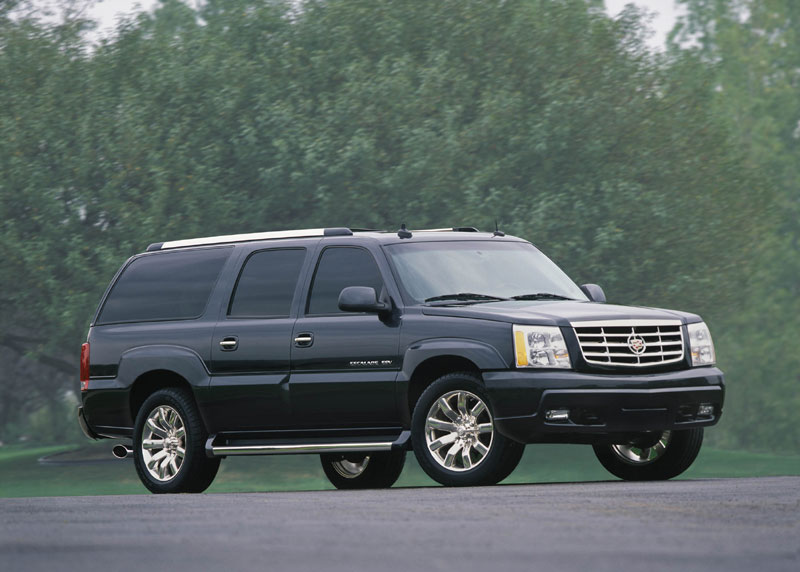
Back to the logic behind the plan. The other day I was driving in a suburban shopping center while I noticed the size of a black Cadillac Escalade EXT. This thing was enormous - almost as big as a city bus, and it got me thinking to this idea I had a while ago - the people that drive these things are ridiculous. There is no excuse for driving a truck that big that gets close to 10 mpg. The cost of tank of gas in these things is at least $100 - yet that is not enough to get someone to drive a hybrid SUV.

Well, I have accepted that we cannot force people to change for the better of society, so if individuals want to continue to practice free choice of driving whatever they feel like driving, even though it is a detriment to us all - make them pay for it. These individuals should either pay an extra $1000 or $2000 fuel efficiency "tax" when purchasing a $70,000 Escalade or they can go ahead and purchase a Toyota Highlander Hybrid which achieves a combined 12 miles per gallon more than the standard Escalade model and comes with federal tax credits at almost half of the cost of the Cadillac. Not a bad trade off if you ask me.


2007 Cadillac Escalade AWD


2007 Toyota Highlander Hybrid 4WD


2007 Cadillac

2007 Toyota Highlander Hybrid
Compare Side-by-Side


Hybrid Vehicle


Possible Tax Incentives


New EPA MPG

MPG ratings for 1985-2007 models have been revised More information.

Premium Gasoline
12
City
14
Combined
18
Hwy

Regular Gasoline
27
City
26
Combined
25
Hwy


Now, if you ask me what the US auto manufacturers should do - they need to continue to invest in hybrid and battery technology so that every vehicle that they manufacture includes a hybrid electric system. The key roadblock to making this a reality is the high cost of the hybrid system. Even though this should only take at the most a few years to figure out, the auto industry continues to lobby the US Congress for more time - 20 more years to be more precise. We should not sit by idly waiting for them to figure it out while individuals who drive the guzzlers get a free ride to polluting our environment and contributing to to the congestion and smog in our cities.

I hope our leaders here in PA and also nationally will have the guts to implement an aggressive, sensible, and yes, controversial plan like this because just asking people to drive hybrids and more fuel efficient vehicle is not enough. The carrot and stick principle is the only way this can work.

Friday, August 10, 2007

Pennsylvania non-profit tells us that coal is "Clean-and-Green" energy

A group called Pennsylvania Families for Coal (FORCE), a "grassroots" corporation, has posted billboards around western PA touting coal as a "clean-and-green" energy source. Critics, and there are plenty of them, have stated that the group is just a front for the coal mining companies. WTAE channel 4 here in Pittsburgh had a feature story on this a few months back, the video coverage and story can be viewed here.

One of the individuals the news interviewed was Doug Farnham, an energy industry veteran whom I had met back in February when I went to see Ed Rendell's introduction of his energy plan here in Pittsburgh. Doug is president of PFBC Environmental Energy Technology, a company that was spun out of CONSOL energy that has since received at least $1 million in grants from the state of Pennsylvania to develop "clean" coal technology which produces power from coal waste, or slurry. The complete process is shown here on PFBC's website.

Even though he didn't return my email when I tried to contact him a few months back, I think Doug is good guy and I think it would be huge news if their waste coal energy system could be commercialized on a larger scale. But still, I find it odd that he would head up or fund an organization that is spending money on propaganda to tell us that coal is clean energy, when we all know how dirty coal plants have made our state one of the dirtiest, not to mention one of the poorest for air quality and greenhouse gas emissions. The fact that Dough's company is trying to produce clean energy from waste coal, he heads up that "grassroots" corporation, and he has relations with one of the biggest coal mining companies in these parts, makes me wonder if something shady is going on. If Doug or anyone at his firm happens to read this it would be nice to hear from you with a response to this.

These misleading attempts by coal industry to advertise coal as clean energy and refute global warming are getting ridiculous. Coal is cheap, and will not be going away anytime soon, but the current process of burning coal makes it the biggest culprit of global warming, not to mention mercury poisoning of our fish and wildlife from the emissions that make it into our lakes and streams.

Instead of becoming the next big tobacco, why doesn't the coal industry focus its attention and dollars on becoming more environmentally friendly rather than trying to hang on to its old ways? When will these energy industries wake up and realize that all the lobbying and misrepresentation of facts is no longer enough to sustain their current levels of profitability?

Thursday, August 9, 2007

Breakthrough for Pittsburgh's leading cleantech company

Plextronics just released news that it has achieved a world record for solar power conversion for single layer organic solar cells.

From the press release:

Plextronics, Inc. announced today that its organic photovoltaic technology achieved a world record in the conversion of solar light to power efficiency. The company's result of 5.4 percent establishes a new world record for single layer organic solar cells as certified by the National Renewable Energy Laboratory (NREL), in Golden, Colorado.
This is huge news for not only Plextronics but for Pittsburgh. Pittsburgh is behind in the race to build a clean tech economy, but I believe we have a gem here in Plextronics, an early stage developer of printed electronics and thin layer photovoltaic cells, and with its success and the national press coverage Plextronics could very well be in the process of buiding the foundation for Pittsburgh's clean economy.

While I expect this record to be broken, the old record was somewhere around 5.2%, I also expect Plextronics to continue to improve their technology and remain one of the leading developers of these thin layer solar cells. I'll post again as I learn more on their progress.

Tuesday, August 7, 2007

Pittsburgh needs to Advance Transit

Pittsburgh's poor transit system is one of the big reasons why the city is not mentioned as a leading sustainable city in the annual sustainability rankings that are released by a few publications each year. With all of the service cuts and debates about tax hikes to raise money for public transportation here in Allegheny County, isn't it about time we looked at alternatives to the tax and cut service mentality that has existed since I moved here over ten years ago(and probably long before then) ?

I used the word "privatization" on one of the burgh blogs as a fix for the mess we have here and was immediately chastised, although I don't see why people didn't look beyond the 'P' word to see examples of successful transit privatization programs in places such as Denver. Privatization of public transit, or at least partial privatization through contracting, has had success in some regions, such as Denver, but it also has had its share of failures. Private transportation, it has been argued, does not cover enough ground as it has zero incentive to cover less than optimal routes. While I have not seen this in action, I could see a for-profit transit company only running routes that are profitable - just like a lot of companies today that focus on customer profitability.

How about a public-private partnership run transit service? Advance Transit is a free bus service covering parts of New Hampshire and Vermont that was started by a non-profit back in 1984. I repeat, Advance Transit is free, and its been around for over 20 years. The service relies on a combination of federal, state, and private donations in order to operate effectively, and at an operating cost of $2.8 million per year, it provides better bang for the buck than traditional public transit.

From the Clean Air Cool Planet website:

Some of the goals of the project are to reduce local traffic congestion, to provide commuters with an efficient and convenient alternative to driving alone, to improve access to local jobs, to provide mobility to senior citizens who are not driving, and to offer convenient transit access to area hospitals, shopping centers, schools, and community agencies.


What is not to like about this program? What would it take to get something like this here in Pittsburgh? For starters, there is a growing concern with the lack of contributions from the powerful non-profits in Pittsburgh. University of Pittsburgh Medical Center (known as UPMC in these parts) is a non-profit that raked in over $500 million in profits last year. The city cannot tax them but it needs to find ways to get them to foot part of the bill for city services.

A public-private transit partnership makes sense here in Pittsburgh. The old public transit will not vanish, but augmentation with new services is necessary to keep this region from going from most livable to most taxed and least commutable. It is time to implement new solutions for our transit problems that are proven to work instead of the same old solution we have done in the past - which is to cut service and raise fares and taxes. It is time to open up to new ideas instead of going with the status quo which has brought up to this point.

While more light rail coverage would be ideal, that won't happen overnight. A new network of public and privately funded buses could be a reality tomorrow.

Monday, August 6, 2007

Data Centers - the return of the giant sucking sound

Computers have always been known to be one of the biggest energy hogs. Due to the increasing number of web servers required to continue our expansion into the digital age, new data centers filled to capacity with computer server racks are popping up all over the United States. This expansion should be a good thing for our economy, but until recently, energy efficiency was not high on the list of priorities for data center operators. Their chief concern was location location location as they looked to expand near place that had access to cheap electricity, which is why Microsoft, Yahoo, and Google have all invested in data centers close to cheap hydro electric producers in the Northwestern US. This lack of planning and foresight could really come back to bite us.

According to a report the EPA just released, power consumption by these data centers is growing out of control. At 1.5% of total electricity consumption, computer data centers are fast becoming the biggest consumers of electricity in the United States. Data center power consumption is on a tear, having doubled since the year 2000 and scheduled to double again by 2011. With Google's digitization of just about everything, and with everyone signing up for blogs, myspace accounts, and online photo sharing, data center operators such as Equinix cannot open enough data centers to keep up with the demand.

From one of my new favorite green blogs, Green Wombat:

"Left unchecked, data centers could double their energy consumption over the next five years at a cost of $7.4 billion annually, according to a report [to the US Congress] issued today by the U.S. Environmental Protection Agency. By 2011, the equivalent of 10 new power plants would be needed to supply 12 gigawatts of electricity unless the energy efficiency of data centers can be improved. That's bad news for the corporate bottom line and the environment. It's also a hit on taxpayers' wallets: federal government data centers alone consume about 10 percent of that electricity.
With the concern for global warming and increasing number of studies related to data center inefficiencies, the free market has the opportunity to once again save the day as a number of established and new companies bring products and technologies to meet the demands of the marketplace. Mature tech firms like AMD, Sun Microsystems, and even Dell, who I picked on for their plant a tree program, have taken the lead among tech companies in promoting energy efficient products and practices. This segment of the tech market has even spawned significant M&A activity as of late, with the recent acquisitions of virtualzation software firms VMWare and OpsWare by EMC and HP, respectively.

The opportunity for startups in this field is wide open. Besides microchips, which has been the focus of AMD and Sun, data center server software and hardware companies have a chance to make a huge splash in solving this growing problem. Even with the industry giants such as IBM and Cisco investing hundreds of millions into solving the energy consumption issue - small startups like Quellan and Net Effect are finding that they can capture a slice of the $4 to $5 billion dollar market with niche products such as more energy efficient cables and adapters. Like the fervor of investing in everything related to green power generation, I expect startup activity in the energy efficiency segment to start making some noise, with the data center segment being the most obvious opportunity for success.

Sunday, August 5, 2007

The Commonwealth of Pennsylvania is a tremendous underachiever when it comes to wind power

Contrary to what Governor Rendell and the press would have you believe, Pennsylvania needs to get its act together on wind power production. I've spent some time doing some research on the wind power installations in PA, the wind projects currently under construction, and the potential for wind power here in Pennsylvania. Pennsylvania is currently generation roughly 3.5% of their potential, and when current wind installations are completed that figure will climb to a measly 5.7%. Of all renewable sources, wind power is the most cost competitive with conventional electricity sources. So what gives? The key suspects are corporate interests groups for the coal and electric industries. These groups have zero motivation to have the state move towards more renewable power sources, even a state and/or federal mandate for renewable energy production gives these companies 20 or more years until they have to act. Until we get leaders in Harrisburg who put our health and well being over the corporate interests, expect to see our state reach its wind energy potential 30 years from now.


PA Wind Power Summary:

Total installed = 179 MW
Under construction = 115 MW*

PA's Wind Energy Potential:
Average Power Output (MW): 5,120
Annual kWh: 45 Billion
Rank in US: 22nd

source: American Wind Energy Association


As you can see by the graphic below, PA is doing good when compared to other states that are not doing much with wind, but Pennsylvania is far behind the renewable energy leaders California and Texas. PA is currently contributing to 1.4% of the total wind power output of the United States, which is pretty sorry when you read reports stating that our state alone contributes around one percent of the world wide emissions that are the cause of global warming. I'm not trying to be an alarmist, but I want our political leaders to stop trying to pull the wool over our eyes when they are touting Pennsylvania's green standing. We are a dirty state. We are getting better but there is a lot of work to do so let's get on it.

US Wind Power Production by State, as of June 2007


Click here for a detailed map of Pennsylvania's wind potential

KWh by State

Saturday, August 4, 2007

U.S. House passes Renewable Energy Standards for Publicly traded utilties - oil company tax cut rollback is up next

Good news so far.......the House approved a measure for a federal mandate that all publicly traded utility companies produce at least 15% of their electricity from renewable sources. This is a big win indeed. Although some states, such as California, are already ahead of the federal government on this requirement, this is still a big deal because it sets the floor at 15% instead of allowing some states to set very low thresholds while overruling the states which do not even have a standard.

Next up - Congress must pass a measure that will roll back $16 billion in tax cuts to the oil companies. Some of the funds from these tax cuts, if rolled back, would go towards incentives for renewables and cleantech development. The oil industry lobbyists, and the slimy congressman who are in bed with the oil companies, are fighting the tax cut roll back intensely, saying it will hurt our domestic oil production.

"We have been down in the trenches fighting (this) proposal tooth and nail," said Tom Kuhn, president of the Edison Electric Institute, the trade association for the investor-owned utility companies. Lobbying powerhouses such as the U.S. Chamber of Commerce and National Association of Manufactures also have fought the proposal.
In the trenches.......that is laughable. Are these individuals, the congressman, the utility companies, and the supporters of big coal and oil, so out of touch with public opinion? I am against an "excise" profits tax, something some of the Democrats have argued for as companies like Exxon are raking in record profits. That is just too anti-capitalist to me. I am all for taking away their tax cuts and using them as subsidies for green energy initiatives . These corporations are in existence today, and making the billions of profits today, because you and I, as consumers, have supported them over the years with our hard earned dollar. The oil enterprise does not exist just to please shareholders - it has to give something back to society. Letting go of tax breaks and investing in renewable fuels is a fair deal.

Here is a suggestion for those that are threatened by the green movement. It is time the oil companies do what great companies do and have done over time - adapt, evolve, and re-invent. The green energy train has already left the building. The oil companies realize their monopoly on fueling our vehicles is waning. They are fighting tooth and nail to hang on to what they have, but if they continue to try to fight it they are only going to aggravate you and I even more, and we will continue to put more emphasis on electing officials who look out for our interests before theirs. If these companies got on board and started investing more seriously in renewable fuels, rather than just spend a few million on BS marketing, we might be able to get somewhere on this issue.

Tuesday, July 31, 2007

Nuclear making a comeback

Nuclear power, an industry that has been dormant since about the time I was born, is on the verge of a renaissance. This month's Fortune Magazine has an excellent feature on nuclear's resurgence here in the US, and travels to Nuclear sites across the country to report on perspectives from both the pro and anti nuke crowd.

Most of the 2008 candidates, along green individuals like myself, agree with the experts that in order to halt CO2 emissions Nuclear power is a necessary evil, if you want to call it that. John Edwards is one of the few candidates who went public with against nuclear power when he declared that " atomic energy had no future in America." Of course, Mr. Edwards also said we should ban construction of coal plants, so not only did he potentially kill his chances in the coal state primary races, he is banking on unrealistic advances in the technology and costs of renewable energy that will be necessary to meet our nation's growing energy demands.

I am from the camp that says as long as Mike Brown and FEMA are not in charge of regulating the industry, we will be safe. In all seriousness, as long as safety and storage regulations are tight I do not think building more nuclear plants is a bad thing. They do not emit CO2 gasses, they create jobs, and the plants provide a lot more power than their fossil fuel counterparts.

Unless clean coal technology is legit and worth the cost (some are saying the marginal reduction in CO2 is not worth the cost), we would have to replace coal fired plants with nuclear plants if we truly want to drastically cut back on our CO2 emissions. This is clearly a new subject area for me as I believe it is my first post on nuclear, and while it is not a green energy source, it is something we are going to have to live with if we care about slowing down climate change. Please read the Fortune article for the bigger picture.

Saturday, July 28, 2007

Book Review: The Clean Tech Revolution


The Clean Tech Revolution is a book that covers the most dramatic industrial shift in more than a century. This book is authored by members of the clean tech consultancy, Clean Edge, and I highly recommended it to anyone looking to learn about the past, present, and future of clean technology, as well as learning about the companies and cities that are the leaders of this emerging industry.


Here are some of the highlights:


  • Audience - The book is great read for anyone who is a potential stakeholder - entrepreneurs, consumers, investors, government officials, and executives will all learn something new after reading this.
  • Organized for easy reference - The book was well organized - anyone looking to learn about one or two particular technologies can jump around to a chapter on the technology they are looking for as the book has individual chapters on wind, solar, biofuels, transportation, green building, the grid, and more.
  • "Ten to Watch" - Each chapter has a list of the company's that are leading that sector - the company names can be found at the Clean Tech Revolution blog.
  • Clean Tech Cities - There is an entire chapter dedicated to developing cities and regions to become clean tech hubs, and like the technology chapters there is a list of the leading clean tech cities. I am hoping we here in Pittsburgh can someday learn how to emulate some of the cities that made the list. Portland and Austin come to mind.
  • Marketing Clean Tech - The do's and don't's for marketing these technologies. There are decades worth of case studies of flawed marketing of solar and other environmental friendly technologies.
  • Verdict - Definitely a great book for you if you are reading this here blog. I would recommend this book to anyone wanting a broad sweeping overview or reference book of the industry. There are several good books available that are more focused on particular industries like oil, electricity, solar, and even green business. I will be reviewing a few of these in the upcoming months.
Some other things to note: It was nice to read that the authors of the book were in agreement with a lot of the things I have posted on here, particularly my position against corn based ethanol. I also agree with the authors that shifting subsidies from "entrenched" conventional energy companies to those producing renewable energies would be the easiest way to support further growth and adaptation of renewables, and I agree with them that sin taxes are another sensible way to fund these initiatives.

Monday, July 23, 2007

Funding for Governor Rendell's Energy Plan voted down

I was present when Governor Ed Rendell presented his ambitious energy independence plan to the Pittsburgh region this past February, a plan I thought had a lot potential to transform the commonwealth of Pennsylvania from one of the biggest polluters to one of the biggest proponents of clean tech. The plan would have made more venture funding available for PA based clean tech companies and firms investing in clean tech startups, in addition to incentives for residential and solar installations. In addition to the obvious economic gains, consumers would supposedly save up to $10 billion in energy costs over the next 10 years, all this, Rendell said, for the cost of "half a cup of coffee per month." Well, not a cup of joe at Starbucks, but you get his point.

Unfortunately, it seems that partisan politics and corporate interests, once again, stood in the way of a good plan being enacted. As part of this $850 million proposal the average residential customer would see a hike of 45 cents in their monthly electricity bill, or about $5.50 over a full year. I know tax is an evil word, especially among the Pubs, but this is one tax that makes sense, to me at least. If it is a tax that saves you many times that much over the long run, how can it be bad? This plan not only brings jobs to PA, but it will help reduce the dependence on oil and will help improve air quality while reducing the state of Pennsylvania's green house gas emissions, which currently stand at an astounding 1% of world wide total.

While this bill will be revisited this fall with a proposal that does not require a tax on consumers, it makes little sense to delay the passage of the energy plan over a 45 cents a month, especially when our state is in a race against other states to bring these companies and jobs here rather than California, Portland, Austin, and other regions much more greener than ours.

Here are some of the facts:

Questions, answers on energy plan

By Jeff Gelles
Philadelphia Inquirer Staff Writer
Gov. Rendell has been refusing to agree to a 2008 budget until the General Assembly passes his Energy Independence Strategy, which he says would save Pennsylvanians $1 billion a year in energy costs. Here are answers to some key questions:

Why the fight? Much of it centers on Rendell's proposal to surcharge electric bills by one-twentieth of a cent per kilowatt-hour to create an $850 million fund for investment in conservation and in renewable and alternative energy.

What would that cost me? Not much, the governor says. For an average residential customer, it would add about $5.40 to the annual electricity bill, or 45 cents per month - less than half of 1 percent of the average electric bill. The largest businesses would have their surcharge capped at $10,000 a year.

So some businesses would pay thousands of dollars more? Only businesses that already pay hundreds of thousands of dollars for their power. The fee would add about three-quarters of 1 percent to the average industrial electric bills, and about six-tenths of 1 percent to commercial bills. A company that pays 9 cents per kilowatt-hour would pay an extra $1,000 if its annual power cost already topped $180,000 a year.

Who's fighting the plan? Power companies are particularly unhappy with provisions that would favor conservation over building new power plants and govern how utilities serve customers who do not shop for electricity after decade-old price caps expire. Some House and Senate Republicans are fighting the surcharge as a new tax, to which they say they are opposed on principle.

Why are power companies opposed? The industry says Rendell is trying to pick winners and losers in the energy market, especially by favoring renewable energy. "How do we know that we're not building in a preference for a less reliable, higher-priced power supply? The wind does not always blow," says Doug Biden of the Electric Power Generation Association.

How would Pennsylvanians save $1 billion a year? Some would be paid back directly. The plan earmarks $100 million for $100 rebates to consumers who replace older refrigerators and air conditioners with energy-efficient Energy Star models. Beyond the rebate, those appliances can save buyers hundreds of dollars in electricity costs over a five-year period - sometimes even in a single year. (For a calculator, go to www.energystar.gov.)

Where does conservation fit in? That's where three-quarters of the projected $1 billion a year in savings come from - in reduced expenses for electricity paid by businesses. State officials say that by reducing electricity use 5 percent, commercial and industrial customers would save $1.9 billion a year in electricity costs, in return for investing $400 million to $800 million in energy efficiencies, such as fluourescent lighting and window and roof coatings.

Could that $1 billion in savings be exaggerated? Possibly, because there is not a straight line from the fund's investments and individual company decisions. But Pennsylvanians spent about $12.6 billion last year for electricity, so cutting back just 8 percent would save $1 billion. Rendell calls $750 million a year in net savings for business a conservative estimate.

If investing $850 million can net $1 billion in savings, why aren't power companies doing it? Because much of that savings would come from money that Pennsylvania consumers, businesses and institutions would not pay to power companies.

Google