


 |
Monday, August 20, 2007

Monday, August 13, 2007
How to fund Pennsylvania's Transit and Infrastructure projects
Attention Governor Rendell and members of the PA House and Senate: A sure way to simultaneously raise revenues and increase the use of fuel efficient vehicles is to implement a program that offers rebates to buyers of fuel efficient vehicles and penalizes buyers of gas guzzling vehicles through a fuel inefficiency tax. This proposal is likely to spark a debate between the folks who claim it would provide a death blow to US auto manufacturers and those like me who believe we must take a more aggressive approach to raising the average fuel efficiency of our vehicle fleets. Recent news suggest that this is certainly not the case, as US manufacturers, led by GM, are closing the fuel efficiency gap between themselves and Toyota, the leading hybrid manufacturer.
Another potential pitfall is that some would argue that this plan would penalize small business owners who need pick up trucks and SUVs to do their work. This is indeed a fair argument, although there should be hybrid options and this new state rebate that would encourage them to drive an SUV that is not in the penalty zone. Certain vehicles should be exempted from this, and some work would have to be done to see which average mpg would be in the neutral zone - meaning your vehicle that attains average fuel efficiency would get neither a rebate or penalty.
Backing up a few steps, I want to share with you some of the logic behind this idea. First, this would not be the first time I have suggested this, as I thought of this a while back and blogged about it here on Green is Good. Recent news headlines coming out of Canada brought this idea back on my radar screen. Canada's Finance Minister is under attack by the auto unions for his proposal for a similar fuel efficiency rebate program. The current proposal is to offer rebates for purchases of certain vehicles, but the most polarizing part of the plan, the list of vehicles that will be penalized, has not been formalized. The last part, the penalty aspect, is the key, because although rebates are good, they do not get people to act as quickly as a bill in the mail stating they owe the federal government $2000 for their purchase of an inefficient vehicle.
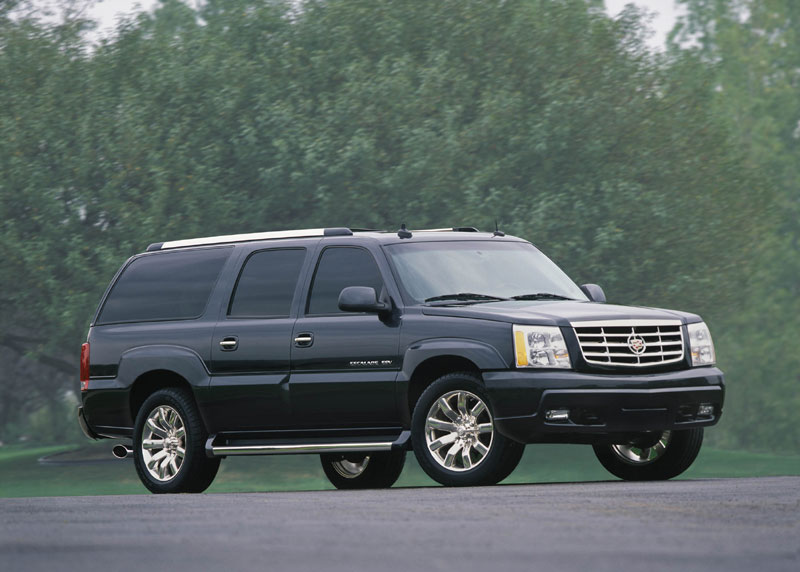
Back to the logic behind the plan. The other day I was driving in a suburban shopping center while I noticed the size of a black Cadillac Escalade EXT. This thing was enormous - almost as big as a city bus, and it got me thinking to this idea I had a while ago - the people that drive these things are ridiculous. There is no excuse for driving a truck that big that gets close to 10 mpg. The cost of tank of gas in these things is at least $100 - yet that is not enough to get someone to drive a hybrid SUV.
Well, I have accepted that we cannot force people to change for the better of society, so if individuals want to continue to practice free choice of driving whatever they feel like driving, even though it is a detriment to us all - make them pay for it. These individuals should either pay an extra $1000 or $2000 fuel efficiency "tax" when purchasing a $70,000 Escalade or they can go ahead and purchase a Toyota Highlander Hybrid which achieves a combined 12 miles per gallon more than the standard Escalade model and comes with federal tax credits at almost half of the cost of the Cadillac. Not a bad trade off if you ask me.
2007 Cadillac Escalade AWD | 2007 Toyota Highlander Hybrid 4WD | |||||||||||||||||||
|---|---|---|---|---|---|---|---|---|---|---|---|---|---|---|---|---|---|---|---|---|
 |  |  | ||||||||||||||||||
| Hybrid Vehicle | ||||||||||||||||||||
| |  | |||||||||||||||||||
New EPA MPG  | ||||||||||||||||||||
|  |
| ||||||||||||||||||

Now, if you ask me what the US auto manufacturers should do - they need to continue to invest in hybrid and battery technology so that every vehicle that they manufacture includes a hybrid electric system. The key roadblock to making this a reality is the high cost of the hybrid system. Even though this should only take at the most a few years to figure out, the auto industry continues to lobby the US Congress for more time - 20 more years to be more precise. We should not sit by idly waiting for them to figure it out while individuals who drive the guzzlers get a free ride to polluting our environment and contributing to to the congestion and smog in our cities.
I hope our leaders here in PA and also nationally will have the guts to implement an aggressive, sensible, and yes, controversial plan like this because just asking people to drive hybrids and more fuel efficient vehicle is not enough. The carrot and stick principle is the only way this can work.
Friday, August 10, 2007
Pennsylvania non-profit tells us that coal is "Clean-and-Green" energy
 A group called Pennsylvania Families for Coal (FORCE), a "grassroots" corporation, has posted billboards around western PA touting coal as a "clean-and-green" energy source. Critics, and there are plenty of them, have stated that the group is just a front for the coal mining companies. WTAE channel 4 here in Pittsburgh had a feature story on this a few months back, the video coverage and story can be viewed here.
One of the individuals the news interviewed was Doug Farnham, an energy industry veteran whom I had met back in February when I went to see Ed Rendell's introduction of his energy plan here in Pittsburgh. Doug is president of PFBC Environmental Energy Technology, a company that was spun out of CONSOL energy that has since received at least $1 million in grants from the state of Pennsylvania to develop "clean" coal technology which produces power from coal waste, or slurry. The complete process is shown here on PFBC's website.
Even though he didn't return my email when I tried to contact him a few months back, I think Doug is good guy and I think it would be huge news if their waste coal energy system could be commercialized on a larger scale. But still, I find it odd that he would head up or fund an organization that is spending money on propaganda to tell us that coal is clean energy, when we all know how dirty coal plants have made our state one of the dirtiest, not to mention one of the poorest for air quality and greenhouse gas emissions. The fact that Dough's company is trying to produce clean energy from waste coal, he heads up that "grassroots" corporation, and he has relations with one of the biggest coal mining companies in these parts, makes me wonder if something shady is going on. If Doug or anyone at his firm happens to read this it would be nice to hear from you with a response to this.
These misleading attempts by coal industry to advertise coal as clean energy and refute global warming are getting ridiculous. Coal is cheap, and will not be going away anytime soon, but the current process of burning coal makes it the biggest culprit of global warming, not to mention mercury poisoning of our fish and wildlife from the emissions that make it into our lakes and streams.
Instead of becoming the next big tobacco, why doesn't the coal industry focus its attention and dollars on becoming more environmentally friendly rather than trying to hang on to its old ways? When will these energy industries wake up and realize that all the lobbying and misrepresentation of facts is no longer enough to sustain their current levels of profitability?
Thursday, August 9, 2007
Breakthrough for Pittsburgh's leading cleantech company

From the press release:Plextronics, Inc. announced today that its organic photovoltaic technology achieved a world record in the conversion of solar light to power efficiency. The company's result of 5.4 percent establishes a new world record for single layer organic solar cells as certified by the National Renewable Energy Laboratory (NREL), in Golden, Colorado.
This is huge news for not only Plextronics but for Pittsburgh. Pittsburgh is behind in the race to build a clean tech economy, but I believe we have a gem here in Plextronics, an early stage developer of printed electronics and thin layer photovoltaic cells, and with its success and the national press coverage Plextronics could very well be in the process of buiding the foundation for Pittsburgh's clean economy.
While I expect this record to be broken, the old record was somewhere around 5.2%, I also expect Plextronics to continue to improve their technology and remain one of the leading developers of these thin layer solar cells. I'll post again as I learn more on their progress.
Tuesday, August 7, 2007
Pittsburgh needs to Advance Transit
Pittsburgh's poor transit system is one of the big reasons why the city is not mentioned as a leading sustainable city in the annual sustainability rankings that are released by a few publications each year. With all of the service cuts and debates about tax hikes to raise money for public transportation here in Allegheny County, isn't it about time we looked at alternatives to the tax and cut service mentality that has existed since I moved here over ten years ago(and probably long before then) ?
I used the word "privatization" on one of the burgh blogs as a fix for the mess we have here and was immediately chastised, although I don't see why people didn't look beyond the 'P' word to see examples of successful transit privatization programs in places such as Denver. Privatization of public transit, or at least partial privatization through contracting, has had success in some regions, such as Denver, but it also has had its share of failures. Private transportation, it has been argued, does not cover enough ground as it has zero incentive to cover less than optimal routes. While I have not seen this in action, I could see a for-profit transit company only running routes that are profitable - just like a lot of companies today that focus on customer profitability.
From the Clean Air Cool Planet website:
Some of the goals of the project are to reduce local traffic congestion, to provide commuters with an efficient and convenient alternative to driving alone, to improve access to local jobs, to provide mobility to senior citizens who are not driving, and to offer convenient transit access to area hospitals, shopping centers, schools, and community agencies.
What is not to like about this program? What would it take to get something like this here in Pittsburgh? For starters, there is a growing concern with the lack of contributions from the powerful non-profits in Pittsburgh. University of Pittsburgh Medical Center (known as UPMC in these parts) is a non-profit that raked in over $500 million in profits last year. The city cannot tax them but it needs to find ways to get them to foot part of the bill for city services.
A public-private transit partnership makes sense here in Pittsburgh. The old public transit will not vanish, but augmentation with new services is necessary to keep this region from going from most livable to most taxed and least commutable. It is time to implement new solutions for our transit problems that are proven to work instead of the same old solution we have done in the past - which is to cut service and raise fares and taxes. It is time to open up to new ideas instead of going with the status quo which has brought up to this point.
While more light rail coverage would be ideal, that won't happen overnight. A new network of public and privately funded buses could be a reality tomorrow.
Monday, August 6, 2007
Data Centers - the return of the giant sucking sound
Computers have always been known to be one of the biggest energy hogs. Due to the increasing number of web servers required to continue our expansion into the digital age, new data centers filled to capacity with computer server racks are popping up all over the United States. This expansion should be a good thing for our economy, but until recently, energy efficiency was not high on the list of priorities for data center operators. Their chief concern was location location location as they looked to expand near place that had access to cheap electricity, which is why Microsoft, Yahoo, and Google have all invested in data centers close to cheap hydro electric producers in the Northwestern US. This lack of planning and foresight could really come back to bite us.
According to a report the EPA just released, power consumption by these data centers is growing out of control. At 1.5% of total electricity consumption, computer data centers are fast becoming the biggest consumers of electricity in the United States. Data center power consumption is on a tear, having doubled since the year 2000 and scheduled to double again by 2011. With Google's digitization of just about everything, and with everyone signing up for blogs, myspace accounts, and online photo sharing, data center operators such as Equinix cannot open enough data centers to keep up with the demand.
From one of my new favorite green blogs, Green Wombat:
"Left unchecked, data centers could double their energy consumption over the next five years at a cost of $7.4 billion annually, according to a report [to the US Congress] issued today by the U.S. Environmental Protection Agency. By 2011, the equivalent of 10 new power plants would be needed to supply 12 gigawatts of electricity unless the energy efficiency of data centers can be improved. That's bad news for the corporate bottom line and the environment. It's also a hit on taxpayers' wallets: federal government data centers alone consume about 10 percent of that electricity.With the concern for global warming and increasing number of studies related to data center inefficiencies, the free market has the opportunity to once again save the day as a number of established and new companies bring products and technologies to meet the demands of the marketplace. Mature tech firms like AMD, Sun Microsystems, and even Dell, who I picked on for their plant a tree program, have taken the lead among tech companies in promoting energy efficient products and practices. This segment of the tech market has even spawned significant M&A activity as of late, with the recent acquisitions of virtualzation software firms VMWare and OpsWare by EMC and HP, respectively.
The opportunity for startups in this field is wide open. Besides microchips, which has been the focus of AMD and Sun, data center server software and hardware companies have a chance to make a huge splash in solving this growing problem. Even with the industry giants such as IBM and Cisco investing hundreds of millions into solving the energy consumption issue - small startups like Quellan and Net Effect are finding that they can capture a slice of the $4 to $5 billion dollar market with niche products such as more energy efficient cables and adapters. Like the fervor of investing in everything related to green power generation, I expect startup activity in the energy efficiency segment to start making some noise, with the data center segment being the most obvious opportunity for success.
Sunday, August 5, 2007
The Commonwealth of Pennsylvania is a tremendous underachiever when it comes to wind power
Contrary to what Governor Rendell and the press would have you believe, Pennsylvania needs to get its act together on wind power production. I've spent some time doing some research on the wind power installations in PA, the wind projects currently under construction, and the potential for wind power here in Pennsylvania. Pennsylvania is currently generation roughly 3.5% of their potential, and when current wind installations are completed that figure will climb to a measly 5.7%. Of all renewable sources, wind power is the most cost competitive with conventional electricity sources. So what gives? The key suspects are corporate interests groups for the coal and electric industries. These groups have zero motivation to have the state move towards more renewable power sources, even a state and/or federal mandate for renewable energy production gives these companies 20 or more years until they have to act. Until we get leaders in Harrisburg who put our health and well being over the corporate interests, expect to see our state reach its wind energy potential 30 years from now.
PA Wind Power Summary:

Total installed = 179 MW
Under construction = 115 MW*
Average Power Output (MW): 5,120
Annual kWh: 45 Billion
Rank in US: 22nd
source: American Wind Energy Association
As you can see by the graphic below, PA is doing good when compared to other states that are not doing much with wind, but Pennsylvania is far behind the renewable energy leaders California and Texas. PA is currently contributing to 1.4% of the total wind power output of the United States, which is pretty sorry when you read reports stating that our state alone contributes around one percent of the world wide emissions that are the cause of global warming. I'm not trying to be an alarmist, but I want our political leaders to stop trying to pull the wool over our eyes when they are touting Pennsylvania's green standing. We are a dirty state. We are getting better but there is a lot of work to do so let's get on it.
US Wind Power Production by State, as of June 2007

Click here for a detailed map of Pennsylvania's wind potential

Saturday, August 4, 2007
U.S. House passes Renewable Energy Standards for Publicly traded utilties - oil company tax cut rollback is up next
Good news so far.......the House approved a measure for a federal mandate that all publicly traded utility companies produce at least 15% of their electricity from renewable sources. This is a big win indeed. Although some states, such as California, are already ahead of the federal government on this requirement, this is still a big deal because it sets the floor at 15% instead of allowing some states to set very low thresholds while overruling the states which do not even have a standard.
Next up - Congress must pass a measure that will roll back $16 billion in tax cuts to the oil companies. Some of the funds from these tax cuts, if rolled back, would go towards incentives for renewables and cleantech development. The oil industry lobbyists, and the slimy congressman who are in bed with the oil companies, are fighting the tax cut roll back intensely, saying it will hurt our domestic oil production.

"We have been down in the trenches fighting (this) proposal tooth and nail," said Tom Kuhn, president of the Edison Electric Institute, the trade association for the investor-owned utility companies. Lobbying powerhouses such as the U.S. Chamber of Commerce and National Association of Manufactures also have fought the proposal.In the trenches.......that is laughable. Are these individuals, the congressman, the utility companies, and the supporters of big coal and oil, so out of touch with public opinion? I am against an "excise" profits tax, something some of the Democrats have argued for as companies like Exxon are raking in record profits. That is just too anti-capitalist to me. I am all for taking away their tax cuts and using them as subsidies for green energy initiatives . These corporations are in existence today, and making the billions of profits today, because you and I, as consumers, have supported them over the years with our hard earned dollar. The oil enterprise does not exist just to please shareholders - it has to give something back to society. Letting go of tax breaks and investing in renewable fuels is a fair deal.
Here is a suggestion for those that are threatened by the green movement. It is time the oil companies do what great companies do and have done over time - adapt, evolve, and re-invent. The green energy train has already left the building. The oil companies realize their monopoly on fueling our vehicles is waning. They are fighting tooth and nail to hang on to what they have, but if they continue to try to fight it they are only going to aggravate you and I even more, and we will continue to put more emphasis on electing officials who look out for our interests before theirs. If these companies got on board and started investing more seriously in renewable fuels, rather than just spend a few million on BS marketing, we might be able to get somewhere on this issue.
Tuesday, July 31, 2007
Nuclear making a comeback
Nuclear power, an industry that has been dormant since about the time I was born, is on the verge of a renaissance. This month's Fortune Magazine has an excellent feature on nuclear's resurgence here in the US, and travels to Nuclear sites across the country to report on perspectives from both the pro and anti nuke crowd.
Most of the 2008 candidates, along green individuals like myself, agree with the experts that in order to halt CO2 emissions Nuclear power is a necessary evil, if you want to call it that. John Edwards is one of the few candidates who went public with against nuclear power when he declared that " atomic energy had no future in America." Of course, Mr. Edwards also said we should ban construction of coal plants, so not only did he potentially kill his chances in the coal state primary races, he is banking on unrealistic advances in the technology and costs of renewable energy that will be necessary to meet our nation's growing energy demands.
I am from the camp that says as long as Mike Brown and FEMA are not in charge of regulating the industry, we will be safe. In all seriousness, as long as safety and storage regulations are tight I do not think building more nuclear plants is a bad thing. They do not emit CO2 gasses, they create jobs, and the plants provide a lot more power than their fossil fuel counterparts.
Unless clean coal technology is legit and worth the cost (some are saying the marginal reduction in CO2 is not worth the cost), we would have to replace coal fired plants with nuclear plants if we truly want to drastically cut back on our CO2 emissions. This is clearly a new subject area for me as I believe it is my first post on nuclear, and while it is not a green energy source, it is something we are going to have to live with if we care about slowing down climate change. Please read the Fortune article for the bigger picture.
Saturday, July 28, 2007
Book Review: The Clean Tech Revolution

The Clean Tech Revolution is a book that covers the most dramatic industrial shift in more than a century. This book is authored by members of the clean tech consultancy, Clean Edge, and I highly recommended it to anyone looking to learn about the past, present, and future of clean technology, as well as learning about the companies and cities that are the leaders of this emerging industry.
Here are some of the highlights:
- Audience - The book is great read for anyone who is a potential stakeholder - entrepreneurs, consumers, investors, government officials, and executives will all learn something new after reading this.
- Organized for easy reference - The book was well organized - anyone looking to learn about one or two particular technologies can jump around to a chapter on the technology they are looking for as the book has individual chapters on wind, solar, biofuels, transportation, green building, the grid, and more.
- "Ten to Watch" - Each chapter has a list of the company's that are leading that sector - the company names can be found at the Clean Tech Revolution blog.
- Clean Tech Cities - There is an entire chapter dedicated to developing cities and regions to become clean tech hubs, and like the technology chapters there is a list of the leading clean tech cities. I am hoping we here in Pittsburgh can someday learn how to emulate some of the cities that made the list. Portland and Austin come to mind.
- Marketing Clean Tech - The do's and don't's for marketing these technologies. There are decades worth of case studies of flawed marketing of solar and other environmental friendly technologies.
- Verdict - Definitely a great book for you if you are reading this here blog. I would recommend this book to anyone wanting a broad sweeping overview or reference book of the industry. There are several good books available that are more focused on particular industries like oil, electricity, solar, and even green business. I will be reviewing a few of these in the upcoming months.
Monday, July 23, 2007
Funding for Governor Rendell's Energy Plan voted down
I was present when Governor Ed Rendell presented his ambitious energy independence plan to the Pittsburgh region this past February, a plan I thought had a lot potential to transform the commonwealth of Pennsylvania from one of the biggest polluters to one of the biggest proponents of clean tech. The plan would have made more venture funding available for PA based clean tech companies and firms investing in clean tech startups, in addition to incentives for residential and solar installations. In addition to the obvious economic gains, consumers would supposedly save up to $10 billion in energy costs over the next 10 years, all this, Rendell said, for the cost of "half a cup of coffee per month." Well, not a cup of joe at Starbucks, but you get his point.
Unfortunately, it seems that partisan politics and corporate interests, once again, stood in the way of a good plan being enacted. As part of this $850 million proposal the average residential customer would see a hike of 45 cents in their monthly electricity bill, or about $5.50 over a full year. I know tax is an evil word, especially among the Pubs, but this is one tax that makes sense, to me at least. If it is a tax that saves you many times that much over the long run, how can it be bad? This plan not only brings jobs to PA, but it will help reduce the dependence on oil and will help improve air quality while reducing the state of Pennsylvania's green house gas emissions, which currently stand at an astounding 1% of world wide total.
While this bill will be revisited this fall with a proposal that does not require a tax on consumers, it makes little sense to delay the passage of the energy plan over a 45 cents a month, especially when our state is in a race against other states to bring these companies and jobs here rather than California, Portland, Austin, and other regions much more greener than ours.
Here are some of the facts:
Questions, answers on energy plan
By Jeff Gelles
Philadelphia Inquirer Staff Writer
Gov. Rendell has been refusing to agree to a 2008 budget until the General Assembly passes his Energy Independence Strategy, which he says would save Pennsylvanians $1 billion a year in energy costs. Here are answers to some key questions:Why the fight? Much of it centers on Rendell's proposal to surcharge electric bills by one-twentieth of a cent per kilowatt-hour to create an $850 million fund for investment in conservation and in renewable and alternative energy.
What would that cost me? Not much, the governor says. For an average residential customer, it would add about $5.40 to the annual electricity bill, or 45 cents per month - less than half of 1 percent of the average electric bill. The largest businesses would have their surcharge capped at $10,000 a year.
So some businesses would pay thousands of dollars more? Only businesses that already pay hundreds of thousands of dollars for their power. The fee would add about three-quarters of 1 percent to the average industrial electric bills, and about six-tenths of 1 percent to commercial bills. A company that pays 9 cents per kilowatt-hour would pay an extra $1,000 if its annual power cost already topped $180,000 a year.
Who's fighting the plan? Power companies are particularly unhappy with provisions that would favor conservation over building new power plants and govern how utilities serve customers who do not shop for electricity after decade-old price caps expire. Some House and Senate Republicans are fighting the surcharge as a new tax, to which they say they are opposed on principle.
Why are power companies opposed? The industry says Rendell is trying to pick winners and losers in the energy market, especially by favoring renewable energy. "How do we know that we're not building in a preference for a less reliable, higher-priced power supply? The wind does not always blow," says Doug Biden of the Electric Power Generation Association.
How would Pennsylvanians save $1 billion a year? Some would be paid back directly. The plan earmarks $100 million for $100 rebates to consumers who replace older refrigerators and air conditioners with energy-efficient Energy Star models. Beyond the rebate, those appliances can save buyers hundreds of dollars in electricity costs over a five-year period - sometimes even in a single year. (For a calculator, go to www.energystar.gov.)
Where does conservation fit in? That's where three-quarters of the projected $1 billion a year in savings come from - in reduced expenses for electricity paid by businesses. State officials say that by reducing electricity use 5 percent, commercial and industrial customers would save $1.9 billion a year in electricity costs, in return for investing $400 million to $800 million in energy efficiencies, such as fluourescent lighting and window and roof coatings.
Could that $1 billion in savings be exaggerated? Possibly, because there is not a straight line from the fund's investments and individual company decisions. But Pennsylvanians spent about $12.6 billion last year for electricity, so cutting back just 8 percent would save $1 billion. Rendell calls $750 million a year in net savings for business a conservative estimate.
If investing $850 million can net $1 billion in savings, why aren't power companies doing it? Because much of that savings would come from money that Pennsylvania consumers, businesses and institutions would not pay to power companies.
Friday, July 20, 2007
Response from Dell
I just received a response to my post on Dell's plant a tree program from one of their environmental spokespersons. Kudos to Bryant from Dell for following up. Here is the text from the comments:
Hi -this is Bryant, I work on environment issues at Dell. Apologies first for the delayed response -I'm just back from vacation today and catching up.
Thanks for the note about Plant a Tree -- it's important to put this program in context-it's part of a very broad commitment to environmental responsiblity by
Dell. Plant a Tree specifically allows us to partner with customers who want to take action to protect the environment. the program allows customers to offset the carbon impact of the electricity their computer will use.
Meanwhile Dell is making strides to make our products the most energy efficient in the industry (a stated goal - our latest business desktop computers are about 70 percent more efficient than previous generations), offering free recycling for any Dell branded equipment and designing all of our products with the environment in mind.
We'll continue to build out Plant a Tree and continue to invest in the program as we expand it to other markets and try to encourage more customers to take part.
I hope that helps explain the thinking behind the customer donation - any questions please let me know - thanks, Bryant
Wednesday, July 18, 2007
Mark DeSantis: "The city needs to 'LEED' by example"
I sat down with Pittsburgh Republican mayoral candidate Mark DeSantis earlier today to further discuss his candidacy and some of his ideas for improving Pittsburgh. First and foremost, my agenda was to talk about Mark's ideas for making Pittsburgh a leading center and magnet for clean tech and renewable economic activity.
Mark has plenty of ideas, and also has some experience in this field as an advisory board member to Sustainable Pittsburgh, a non profit whose mission is to "affect decision-making in the Pittsburgh Region to integrate economic prosperity, social equity, and environmental quality bringing sustainable solutions to communities and businesses."
The first thing Mark said is that the city government must lead by example. What does that mean, I ask? "The city owns roughly 300 buildings around town. We must start to make those energy efficient. While our financial situation will limited our ability to make all of those green (LEED) certified, we need to start taking steps in that direction."
Great start, as the government leading the way would help increase awareness of climate change and energy efficiency among Pittsburghers.
We then started to discuss Austin Texas and the partnership there between Austin Energy, the city run utility, and the Clean Energy Incubator out of the University of Texas. Mark agreed that we must be creative in our attempt to lure clean tech businesses and startups to Pittsburgh as our financial constraint limit the cities ability to keep handing out tax subsidies. This includes forming partnerships with suppliers, universities, non profits, and councils and incubators like Pittsburgh Tech Council and Innovation Works. What we have here is "a lot of separate individuals and groups out there trying to do different things in this sector, and what we need is an overarching group that pulls together the entire vision for clean tech here in Pittsburgh.
Mark suggested a Clean Tech Advisory Council to oversee all of the individuals groups and consortiums such as the Green Building Alliance, companies looking to develop clean technologies in Renewable fuels and Solar, and the early stage start up companies that are already here in Pittsburgh, like a Plextronics.
One of the most important things he mentioned in regards to the cleantech sector here in Pittsburgh is the lack of collaboration between the city and our universities. Carnegie Mellon has the Green Design Institute, but why hasn't there been any major projects undertaken by the city with the guidance of CMU's GDI?
As you could probably guess, being a technology guy and green advocate Mark has a lot to say on this particular issue. I hope to work with Mark when it comes time to develop more concrete plans, but I like the direction he is going on this issue. See my Democrats for DeSantis blog for more on my talk with Mark.
Monday, July 16, 2007
Green Collar Jobs
The John Edwards Presidential campaign recently unveiled an ambitious plan for 1 million new jobs in the clean tech sector. The cleverly dubbed "Green Collar" jobs moniker is not only good marketing, it is a very promising initiative with a high probability of success - as long as the investments and subsidies for these new jobs go to the right sectors and the right people.
Here are a few of the things I like about the Green Collar jobs plan:
- The plan will build a broader manufacturing base for clean tech in the US
- The plan would create job certifications which means there will be an available pool of qualified installers for those wanting solar and even wind power on their properties. This is huge as the current demand for consultants and installers far outstrips the supply
- The job training plan will involve high schools and community colleges - this is good because it builds awareness on clean tech and global warmer at an earlier stage. Most four year colleges and universities haven't even begun to scratch the surface on this issue!
- National 25% renewable electricity - this is a good start
- Funding of the plan comes from Edwards proposed $10 billion New Economy Energy Fund which is funded by the auctioning of greenhouse gas pollution permits and the repealing of oil subsidies. I like this because it is sort of like a sin tax - make the big polluters who refuse to change pay big time for their mess
Here are some youtube clips of Edwards interviews on the Green Collar initiative.
Tuesday, July 10, 2007
Ford CEO "Plug in Hybrids are 5 to 10 years away"
Ford's CEO Alan Mullay, formerly CEO of Boeing and the driving force behind Boeing's new fuel efficient Dreamliner aircraft, recently annoucned that plug in hybrid vehicles would be available on Ford's showroom floor within 5 to 10 years. That is not soon enough, in my opinion at least. Rumors are circulating that Toyota would be introducing its first production Prius Plug-In Hybrid for the 2010 model year. This would mean the plug-in Prius would be in show rooms around fall of 2009, a little more than two years from now.
For Ford to state that it won't even begin testing a plug-in Ford Escape model with a small number of consumers (20) until 2009 means they are still not making climate change and fuel efficiency the critical issue that their survival hinges upon. If Toyota is going to have a Prius on the showrooms in 2009 and Ford is 3 or more years behind them does that make you comfortable if you are a Ford shareholder or loyal Ford customer? Isn't it clear by now that the big three missing the boat on fuel efficiency and hybrids a few years back almost led to their demise? Shouldn't that have been their wake up call?
Sunday, July 8, 2007
Dude! Buy a Dell, plant a tree!
Buy a Dell and you can have them plant a tree for an extra $6! Wouldn't it be nice, however, if instead of asking the consumer for the $6 Dell donated some of it's own money to plant the tree? Someone remind Dell's CFO that it is no longer just about the bottom line these days. What if Dell decided to sell Green PCs and then set aside a certain amount of each sale for environmental causes, like planting trees? Just a thought.
Saturday, July 7, 2007
Madonna at Live Earth: "Start a Revolution!"
It is almost 11pm Saturday night and Live Earth is currently playing on three different stations on my TV, two of those three are in HD. A few years back I would have had to go pay-per-view for this event. Talk about progress. Madonna just completely rocked it, as did the Police who I just saw performing "Message in a Bottle" with Kanye West.
One thing that annoys me during these events is when the hardcore environmentalists focus on criticizing celebrities like Madonna or Al Gore for flying in private jets or driving SUVs. Yes, it sucks that they have to fly jets all over the place, but the positive impact a Madonna or Al Gore have had on raising the awareness of Global Warming is far greater than the negative impact or "carbon footprint" left behind by these individuals. How are these people supposed to travel around the world to spread their message? A Toyota Prius? I think the focus should be on improving the technology behind the methods they use to travel rather than the actual method itself. If more private jets use biofuels or something more efficient than current jet fuels then that is progress. We cannot expect everyone to start walking or taking the bus to work. That isn't going to happen. If we can get more individuals to use mass transit and car pool that would be great, but in the end not most individuals will not change their habits so we must focus on making our vehicles more fuel efficient and less polluting. Make sense?
Thursday, July 5, 2007
Marketing green products? Forget the "times a million" math
I've been an avid follower and reader of Seth Godin for some time now yet this is one of the first posts he's had in while that is aligned with this blog.
Why aren't more people buying hybrids and other green products? Seth thinks it is the math that marketers use to tell the story. People aren't going to do the calculations when green marketers tell us that "if 1 million switch to (enter green product here), we will cut down on emitting 100 million pounds of CO2 emissions." They aren't going to do the math and they, they being your average American, do not care about being that .0001% solution to the big problem.
This marketing dilemma has been the biggest factor in solar power not being able to "cross the chasm", although a decline in prices and increases in subsidies continue to make solar more feasible for homeowners. It is also a big problem with marketing compact fluorescent light bulbs. Even though a CFL will typically save you about $40 a year per bulb it is tough to market that when the cost is ten or more times the standard.
The way to reach consumers and make more of them "go green" is to make the message hit home. "Buying a Prius saves the typical commuter $500 a year in fuel costs. The Prius also gets you a $2000 tax credit from Uncle Sam." That is more effective than the "times a million" math, don't you think?
Follow Zee Germans
Germany's environment minister (do we have one of those?) announced today that the country would aim for the ambitious goal of having 45% of its electricity supplied by renewable sources. Germany is well on its way of reaching that goal as well as the target for 2020 which is currently 20% of electricity from renewables such as wind and solar. The nation has already passed its 2010 target which was set at 12.5% back in 2000.
Wow. Talk about leading the way in the race for energy independence. This is one arms race I am all for. Let's hope our leaders - and their counterparts in China - view this decision by Germany as a challenge. We can barely raise fuel efficiency standards above 30 mpg by 2020 but a green president in the oval office is all it takes to change that. I am hoping that the green economic boom and resulting economies of scale result in cheaper clean electricity but it is also going to take leadership at the top to stifle the auto and oil industry lobbying machines to reach the challenge thrown down by Germany.
How NOT to market a high tech company
Earlier today I was doing some investigation into what had become of Ebara Solar, a solar cell manufactuer out of Belle Vernon, PA that was purchased by Japan's Ebara Corp from Westinghouse Electric back in the 90's. It turns out the artist formerly known as Ebara Solar was shutdown in late 2002 and then eventually saved by a Chinese company that goes by the name "King of Fans." The company is now known as Solar Power Industries. I believe they are still the only solar manufacturing company in the state of Pennsylvania and quite frankly, their website is hideous. It looks like something I put together 12 years ago when I was a teenager figuring out how to code HTML over a 9600 bps modem. Ahhh, those were the days.
According to their latest news headlines, (which were not listed on the website!) it seems like the company is doing well so someone, please, get them a new website! Here is their contact information from the website,, notice how the contact for the web site is asking you to contact him for problems or "site suggestions."
| |
| For inquiries on products contact: |
| Dick Rosey at rrosey@solarpowerindustries.com or 724-379-2001 |
| For employment opportunities contact: |
| Robert Lazzari at rlazzari@solarpowerindustries.com or 724-379-2003 |
| For problems or web site suggestions contact: |
| Barry Munshower at bmunshower@solarpowerindustries.com or 724-379-2022 |
Mayor learns about sustainable strategies at Los Angeles Mayoral conference
Rich Lord's article in the Pittsburgh Post-Gazette asks if the Steel City will be known as a Solar City after the announcement two weeks back that the city of Pittsburgh will receive funding for solar projects from the DOE. Mayor Luke Ravensthal (aka #1 Tiger Woods fan), who had announced months ago that the city would begin using biofuels in its vehicle, also announced the the city council has finally approved state grants for the biofuel conversion kits for city trucks, meaning we should start seeing less of the black soot that the buses and garbage trucks have been belching into the atmosphere all over town. As the PG's chart shows, Pittsburgh is one of the least sunny cities, with less than half of the days of the year having enough for solar power. Other clean sources need to be explored by the city.
Next up on Pittsburgh's "clean" agenda: explore options for wind and kinetic hydro power. While I do not know the specifics about the requirements of wind power, I do know that the currents in parts of the 3 Rivers are fast enough (> 4 mph) to allow the installation of turbines on the riverbeds. How much power will they produce? That depends on the number of turbines that are placed but with miles and miles of rivers throughout the region there should be more than enough to power a significant number of homes. Verdant Power already has a working prototype of their technology in the Hudson River off the shores of Manhattan, and San Francisco recently announced exploring hydro turbines in the San Fran Bay.
If you really care about a clean energy in Pittsburgh, go to Verdant's site and email them and them to conduct a feasibility study here in the burgh.
Monday, July 2, 2007
How far behind is Pittsburgh?
I often wonder how long it will take to get people in this area to start coming around to the idea of "Going Green." The other day I met Rhette Rogozinski of the Pittsburgh Sierra Club at an event in Mt. Lebanon and talked with her about her involvement for a few minutes. Rhette said that a few other local chapter members from the area meet about once a month to discuss current issues which at the moment include getting the town commissioners on board with an effort to cut the town's GHG emissions. Rhette also mentioned that the senior high school will either be renovated and/or have new construction to expand the school within the next few years. There is some discussion around making the new high school LEED certified but I haven't found any confirmation on that.
Meeting someone like that gives me hope but I still think the average person in this region thinks those of us promoting green initiatives are a little "nuts." We still have work to do when it comes to changing the mindset of individuals. A few examples. People at my work discover I have a blog on alternative fuels and clean tech - they look at me like I am a nut case. People think it is weird that I carpool to work. My wife, among others, asks "Why would you put up with someone else driving to work everyday. Doesn't that get annoying?" Well, parking for $10 a day and $3+ a gallon of gas adds up. I also do not (yet) own a fuel efficient hybrid so for now me driving by myself into work each day makes me feel like a complete a-hole.
So how do we change the mindsets of these individuals who do not have the environment and energy efficiency on their radars? Education is the first place to start. With energy prices playing such a huge role in our economy we need more economic and public policy professors talking about energy efficiency and alternative energy sources. CMU's Tepper School of Business has a professor who is world reknown for his thought leadership in the area of energy policies. Check out these interview clips with Professor Lester Lave on gasoline prices.
How else do we inform the average Pittsburgher or other individuals in the US who do not have a clue on this issue? Incentives in the form of taxes and rebates are something everyone notices. I am against a tax increase at the pump it is a regressive tax that hurts the less fortunate while not making a dent in changing behaviors. What I am for is taxing new vehicle purchases based on their fuel efficiency. Let people buy their Hummers - I am all for free choice. But individuals should pay when their actions negatively affect society and so a tax for purchasing a Cadillac Escalade, in my eyes, is a good "sin tax." By the way - the tax rate for these new vehicles purchases should be on a sliding scale. Average fuel efficient vehicles should have a lower tax rate while those that are ultra fuel efficient should even get a tax credit.
What other methods do we have? It's all about the issue hitting home. For my wife, who is an animal lover, seeing the effects global warming has had on the icecaps and polar bears has led her to get on board the green train, although she is not as "coo-coo" on the issue as I am. Economic development is another way to get people's attention. Cleantech investments have proven to that they can provide growth economies almost over night in certain parts of the country and world.
So what is the tipping point? As Lester Lave points out in the interview posted above and in this editorial, $3 a gallon gasoline has not impacted the behavior of Americans. Unfortunately, higher gas prices and maybe even an oil crisis will have to happen for the majority of Americans to accept the fact that they must change their habits. I wish it didn't have to happen that way but I have to say our culture is pretty sad these days. We spend more time thinking about reality TV, video games, i-Phones, and fantasy football to really make an effort to do what is needed to save the planet.
Wednesday, June 27, 2007
Got Milk? Spike in fuel and corn prices driving the price of milk to all time highs
The mainstream media has finally broken the news - higher demand for ethanol has lead to a chain reaction of inflation throughout the food chain. Dairy products like milk, cheese, and pizza are experiencing inflation due to dairy farmers having to raise their prices with a gallon of milk approaching $4 at the grocery stores.
Now here is my question to you. For the short term consumers are going to suffer from both $3 gasoline and $4 milk, but what does this mean for the long run?
I for one think it could save us from going farther down a path towards chaos. I am serious when I say that. Corn is a commodity that should not be treated like a non-renewable fossil fuel. With the exception of natural events such as hurricanes, droughts, etc the price of corn should remain stable and not be subject to shortages due to government policies.
If our governments, both federal and state, continue to subsidize ethanol investments then we are going to be in a heap of trouble. There is only so much land available to grow corn and only so many bushels of corn that can supply ethanol fuel without affecting our food chain.
So, is there anyone out there who still think that corn based ethanol won't have a big impact on our food chain?
Tuesday, June 26, 2007
Candidates respond to Senate's (watered down) Energy Bill
The latest energy bill that was just passed by the Senate contains a lot of loopholes for auto manufacturers and only an average fuel efficiency requirement of 35 MPG by 2020. It looks like those campaign contributions are already paying off! As Thomas Friedman points out in today's NYT, the hoax is not the threat of Global Warming and Climate change, but rather the promises of our politicians to do something about it. Besides a huge failure on vehicle fuel efficiency the Senate failed to include a mandate for utilities to provide 15% of their power from renewable sources.
Here are some of the comments from a few of the 2008 Presidential candidates. Some of the BS on this bill makes me gag.
Senator Hillary Clinton: “This bill is an important step towards increasing our energy independence and fighting global warming,” said Senator Clinton. “As we move forward I hope we can do even more to spur investment in clean energy and create new jobs.”
My comment: Unlike many of her Democratic rivals Senator Clinton is definitely not playing the "anti-big business" card. Sure, she can trash the Bush administration, but where is the tough talk on the automakers and oil companies?
Governor Bill Richardson: "The Senate's energy bill makes progress, but not nearly enough. I especially congratulate Senator Feinstein and conservationists who finally got SUV's included in the fuel economy standard. But overall it's another band-aid approach, not the comprehensive medical treatment our nation's energy policy needs. The fuel economy standards will not spur serious technological innovation and change. They are still far below those of Japan, China, and Europe. To be world leaders, the United States has to be serious about fuel economy. The Senate's failure to adopt even a 15% renewable electricity requirement is another failure. The future lies in sustainable, renewable energy and both the Congress and the President are failing to prepare for the future."
My comment: I think Richardson is definitely one of the few who truly get this issue. Too bad his state is ranked close to last place in about every major category from education to healthcare.John McCain: "We don't want to do anything that would kill any of the Big Three", "I would prefer to see it done voluntarily, myself..." "You're seeing a different attitude on the part of the manufacturers," he said. "They're going to have to make adjustments. Manufacturers all know that. And the industry is in trouble. We all know that."
My Comment: What ever happened to that wily maverick named John McCain? Talk about selling out.
What about Mitt Romney, Rudy Giuliani, John Edwards, and Barrack Obama? Unfortunately I did not find any quotes related to this energy bill but I did want to mention a few of my observations.
First, Obama did go to Detroit to speak to the automakers and mentioned a plan to trade health care insurance assistance for higher fuel standards. He also proposed a plan to increase fuel standards by 4% annually. Obama's website had some nice content on where he stands on Global Warming and I think he is a candidate that is serious about breaking the oil addiction.
I would have to say that John Edwards' website has a lot of information on the issue as well, although when listening to him and by reading the press releases from his camp energy issues do not seem to be anywhere near the top of his list of priorities. Thats just my opinon though.
I couldn't even get passed the introduction page to Rudy Giuliani's website. If this was an exam he would fail before he even got to question #1. Maybe this is Rudy's way of forcing you to donate to his campaign?
Last but not least is Governor Mitt Romney's website. I have to say I've been impressed with Romney overall so far but the lack of details on energy issues at his web site is disappointing. Here are some video clips of him speaking to energy issues and energy independence. He doesn't get into specifics and his responses seem to be very generic. I would have to say the jury is still out on Mitt for this issue although I really liked his quote that "Healthcare, education, and the environment are not Democratic issues. They are American issues."
Sunday, June 24, 2007
Google says "Don't be Evil - be Green!"
The news of Google.org's RechargeIT initiative is very exciting. With companies as powerful as Google putting their money where their mouth is I feel a sense of hope that we still have a change to turn things around because let's face it - our politicians and the majority of the "traditional" corporations have had enough time to do something about climate change and energy independence. Both have failed miserably.
Now it is the Google guys' turn. The RechargeIT initiative is similar to the one proposed by the Mayor of Austin, Texas. Here is how it works - Google will utilize its 1.6 MW solar installation (largest of all corporate campuses) to recharge its fleet of plug-in hybrid vehicles while they are parked during the day, and, they will also utilize vehicle-to-grid technology to feed excess power back to the grid which would then be distributed by the utility.
Talk about a breakthrough. If this is indeed a viable technology - it has been around for a number of years now - our vehicles will no longer be gas guzzling pollution emitting people transporters, rather, they would become zero or low emission portable power stations. It could be ten years or longer before I see this technology here in my area, but I think that thanks to Google's lead this could be a common practice within the next few years in more progressive regions like California and Austin.
Google's Great Barrier Reef
Toyota Prius Plug-in
 | |
 79.6 MPG
  142.5 Wh/mile
 This car is a gasoline-powered Toyota Prius that has been modified by adding a second, larger battery. The additional battery can be charged using a normal 120-volt outlet, ideally at night when electricity demand (and cost) is at its lowest.
Thursday, June 21, 2007
City of Pittsburgh and local startup Plextronics receive DOE funding
The Department of Energy announced today that as part of the Solar America Initiative it was providing $60 million in funding for solar energy research. Pittsburgh was one of the 13 "Solar America Cities" selected to receive funding for solar energy projects in a move that I hope kick starts the Green Pittsburgh movement. The DOE will provide financial assistance and will assist city officials with energy planning and solar integration. Sounds like a nice win for the burgh. I hope to follow up with a status report of the two year project once it begins.
Plextronics is a start up I have been following for some time. The company is funded by several of the leading VCs in this area and it's management team consists of several Carnegie Mellon and University of Pittsburgh alums. Plextronics' product pipeline looks very promising, particularly the printed electronic solar cells. The DOE's $27 million PV Incubator award will be split among a number of early stage solar companies that are predominantly from the west coast, with Plextronics expecting to receive up to $3 million of the total. The award would be used to fund commercialization of a thin film organic PV material, known as OPV, that would be applied to low cost solar cells. The Plextronics press release is here.
Wednesday, June 20, 2007
Hurting their cause - When individuals or segments of activist groups go over the top
Following my post on meeting up with Greenpeace in Chicago my friend who lives on Chicago's northside said that I was "joining up with a bunch of terrorists." He was referring to news of several incidents in which Greenpeace members from other geographies and countries went a little too far and actually did some things some would call "piracy." The charges of piracy came about when Greenpeace boats rammed into whaling boats. I think that is a ridiculous way to make your point and I do not condone it. I also do not label Greenpeace an "eco-terrorist" organization as this is an example of how idiots are everywhere and how idiots ruin it for the responsible ones.
The thing that made me think of this was a story from a friend this evening in which he and his car were caught in the middle of a Critical Mass event in Pittsburgh's Oakland neighborhood. My friend was actually harassed as a mob of bicyclists surrounded his car and shouted and cursed at him. It came to a point where one of the riders hit his car with a bike lock, causing some damage. HOW RIDICULOUS!!!! Talk about hurting your cause. Just like the Greenpeace example, idiots are everywhere and just because a few of them did this at a Critical Mass rally in Pittsburgh it doesn't mean all members are complete loons.
Anyone else have any negative experiences with some of these activist groups?
Tuesday, June 19, 2007
What happens when politicians are former scientists, engineers, and economists?
They actually get it! China is considering a ban on all corn and food based fuel production. The politicians in China realize the consequences of food inflation due to increased demand in the corn when used for fuel. Amazing isn't it?
Message to our government - swapping Petro based fuels for Ethanol is not the answer!!!
While we're on the subject of ethanol, for those of you with access to The Wall Street Journal, Matt Vella has an excellent story on his road trip around the US driving an E85 FlexFuel Chevy Suburban. Mr. Vella points out that while there are environmental benefits to driving with E85 fuel, because of lower fuel efficiency of ethanol a gasoline only Toyota Prius would achieve great efficiency and less green house emissions. Here are some of the highlights:
"My excitement at having a full tank of E85 was quickly dulled by the lack of perceptible performance difference between the renewable fuel and regular gas. The driving experience was, in fact, indistinguishable. No electrical whine of a hybrid motor. No gurgling growl of a diesel. Nothing to let me know I was driving greener.
Reduced fuel economy was noticeable. A Suburban gets between 14 and 20 miles per gallon, whereas on E85 the same vehicle earns just 10 to 15 miles per gallon.
Pros: E85 is a renewable energy source; growing feedstock – usually corn -- recycles carbon; fewer emissions; gas engines require no modifications to run E10, a blend of gas with 10% ethanol, and minor changes to burn E85; cost premium of an E85 capable vehicle is just a small fraction of diesel or hybrid technology; flex-fuel vehicles can run on either gas or ethanol.• Cons: E85's low-energy content drops flex-fuel vehicles' fuel economy by about 30%; limited availability; looming concerns over water used to grow crops, soaring corn prices.
"
Positioning Pittsburgh for the Future
Today's Post-Gazette article by Carolyn Pengidore of Comperio Energy asks how can Pittsburgh position itself to take advantage of the economic opportunities associated with alternative energies and green practices. Her article mentions how Pittsburgh must get ahead of the clean energy tidal wave and take advantage of Governor Rendell's new energy independence initiative. Here are my thoughts on how we must reposition Pittsburgh as a region known for clean tech and green policies
To start, Pittsburgh has the story - a city that was once the industrial center of the world - black smoke and all - and one that is still in the midst of a major social-economic transformation. The reason I believe we are still in the transformation stage is that Pittsburgh does not have an identify - nationally and internationally - as being known for something besides the "Steel City." The region is also behind the curve in terms of immigration - most large cities already have had an enormous influx of Mexican immigrants and I believe Pittsburgh's low cost of living will soon lead to the same effect happening here.
One thing is clear when looking at all of the regional marketing and communications for the region - the messaging is confusing as those in regional development positions, our elected officials, and their overpaid consultants still struggle to come up with a new identity for the region. "Great place for families" and "Most livable" are two messages I see a lot these days but they don't really define the region as a whole and arguments could easily be made against both claims (high taxes, public school quality, air quality, etc).
I know how important the industrial heritage is to this region so I'm not stating that the next big thing for Pittsburgh will make the steel association obsolete. The Steel association is important to the region - it brings up images of how Pittsburghers played a critical role in the industrial revolution and laying the foundation for this country. It reminds us of the hard working European immigrants who settled here and made Pittsburgh the city we know and love today. It is also why I find it puzzling that our past full of diversity and change brought on by the immigrants and industrial revolution are represented by a culture of "Who Moved My Cheese" and intolerance to those who are "different" than the rest of us.
However, as Dick Florida and many others have pointed out, the old Pittsburgh mentality is the exact opposite of what is needed today to fuel growth in major metropolitan areas. Pittsburgh needs to be open to change and tolerance and needs to take the lead on something just like it did with the steel industry. As Ms. Pengidore points out in her Post-Gazette article, the region is positioned nicely and has the amenities to be a leader in clean tech and renewable fuels.
What we need now is an audacious plan that positions the Pittsburgh region for the next generation, a new identity that is more than just a marketing pitch or press release . This has to be more than just offering grants and incentives like the Rendell Energy Strategy. This initiative, this plan - it has to be a plan that covers the entire region and leverages all of the intellectual as well as risk capital that is available for something of this scale. Creative Destruction may be in order for a change of this magnitude , a revolution if you will, as we will be redefining one of the important American cities of the 20th century. This audacious plan needs to be big enough and broad enough to anoint Pittsburgh as the "Green" city rather than a Steel City. Where do we start? How do we do this?
First, it's time to start trumpeting our successes with green practices - more national and regional marketing of our leadership in Green Building is an easy place to start. Pittsburgh is home to first LEED certified convention center, in addition to many other buildings with green designs (full list is here).
How about green companies? Pittsburgh is still the birthplace and home of the central offices of Alcoa, one of the greenest and socially responsible manufacturing companies on the planet. How about clean tech startups? Plextronics is an early stage company based in Pittsburgh that is working on manufacturing a breakthrough thin photovoltaic material that generates solar electricity.
Here are some of the things we have going for us in the race to become the "Green" city:
- Leading city for green buildings
- Support and research at leading academic institutions (See CMU's Green Design institute) as well green graduate degree programs (why isn't CMU marketing it's GREEN MBA program???)
- With Consol Energy's presence, the Pittsburgh region could become known as a leader in clean coal technology (let's hope the folks at Consol are sincere)
- State alternative fuels and energy grants and incentives (part of Governor Rendell's Energy Independence Strategy)
- Large urban parks and creation of 3 rivers parks and trails
- Poor air quality rankings year after year which provides some extra incentive to get going on these initiatives
- Risk averse culture - status quo is the easiest route so why should we change?
- Local government support - politicians not on board with this movement yet and once Steelers season starts forgettaboutit
- Lack of incentives for green businesses - subsidies going towards casinos and sports stadiums rather than young innovative companies that will bring jobs and capital to the region
- Lack of public and government support for mass transit and car pooling - how do we incentivize people to stop driving their cars? (parking tax hikes are okay as long as there are viable alternatives for commuters such as light rail) How do we raise more money for more rails?
- Lack of a manufacturing sector - most of the solar manufacturing companies are out west - close to the venture capitalists. Incentives are the only real option we have right now to get them here
- What other areas are we weak when it comes to going green? Please comment with your suggestions.
Subscribe to:
Posts (Atom)

